
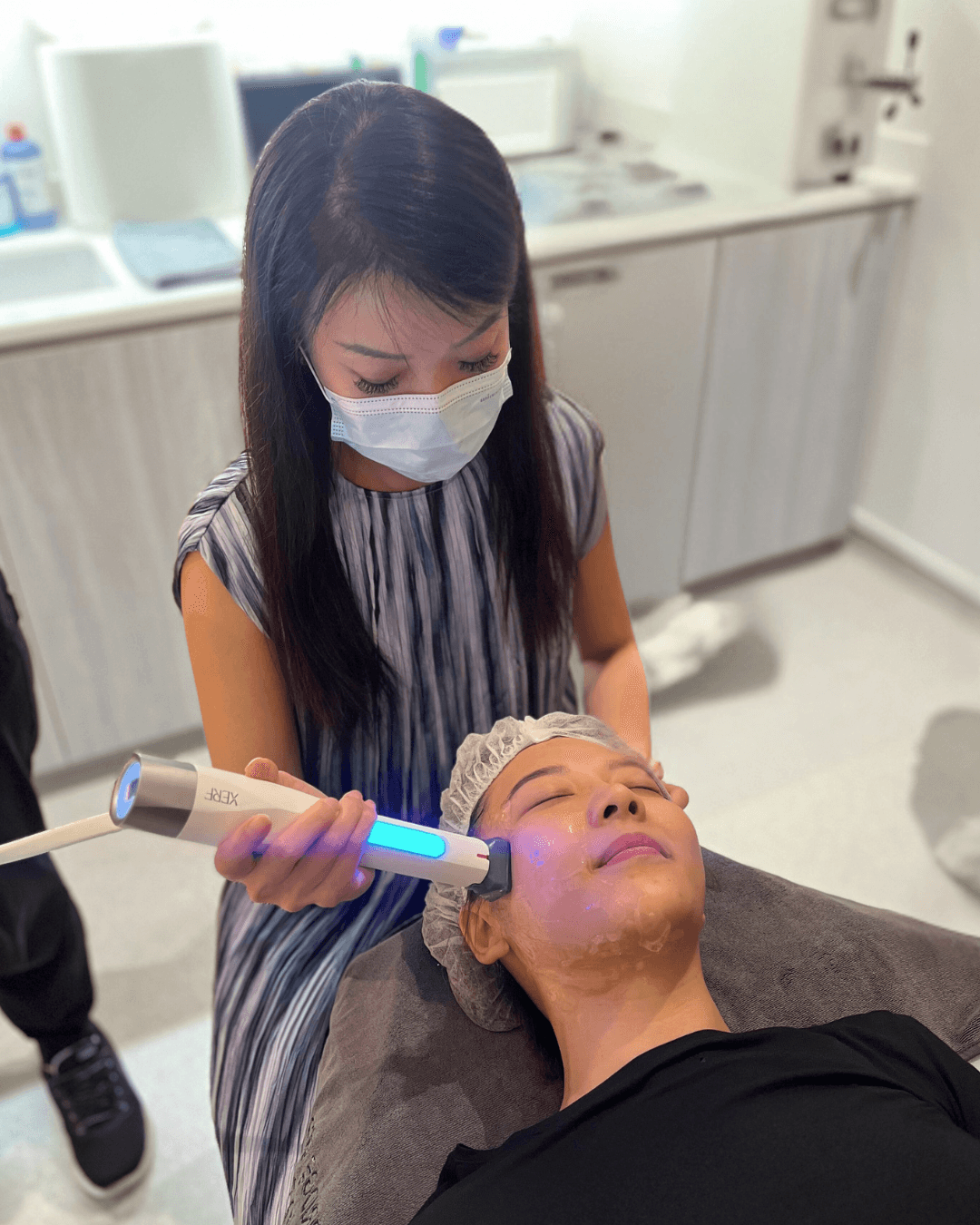
XERF Skin Tightening Treatment in Singapore

As we age, our skin gradually loses collagen and elastin, the proteins responsible for keeping it firm, smooth, and resilient. This natural process often becomes more noticeable from our 30s onwards, with subtle changes such as a softer jawline, mild jowling, reduced skin firmness, and increasing laxity around the neck and lower face. Daily exposure to ultraviolet (UV) radiation, lifestyle factors, and genetics may further contribute to these visible changes over time.
XERF is a non-invasive radiofrequency (RF) skin tightening treatment designed to support collagen remodelling without surgery or needles. Developed in Korea through the collaboration of Lutronic and Cynosure, XERF combines dual-frequency monopolar radiofrequency technology with integrated skin cooling to deliver controlled thermal energy to the skin while helping maintain patient comfort throughout the procedure.
Approved by the Korea Ministry of Food and Drug Safety (MFDS), XERF is available at selected medical aesthetic clinics in Singapore for individuals seeking a non-surgical option for mild to moderate skin laxity. By stimulating the skin’s natural collagen-producing processes, XERF is designed to support gradual improvements in skin firmness with minimal downtime.
What is XERF?
XERF is a radiofrequency (RF) skin tightening treatment that uses dual-frequency monopolar radiofrequency energy to deliver controlled heat to different layers of the skin during a single treatment session. Rather than relying on a single frequency, XERF combines two complementary frequencies to address multiple tissue depths simultaneously, supporting collagen remodelling across different structural layers of the skin.
The technology was co-developed by Lutronic and Cynosure, two established medical technology companies with experience in energy-based aesthetic devices. XERF has also received approval from the Korea Ministry of Food and Drug Safety (MFDS) and was recognised with the SBR Technology Excellence Awards 2026 for innovation in medical technology.
The treatment incorporates two radiofrequency frequencies:
6.78 MHz, designed to deliver energy to superficial dermal layers.
2 MHz, designed to deliver energy to deeper tissue layers that contribute to skin support and firmness.
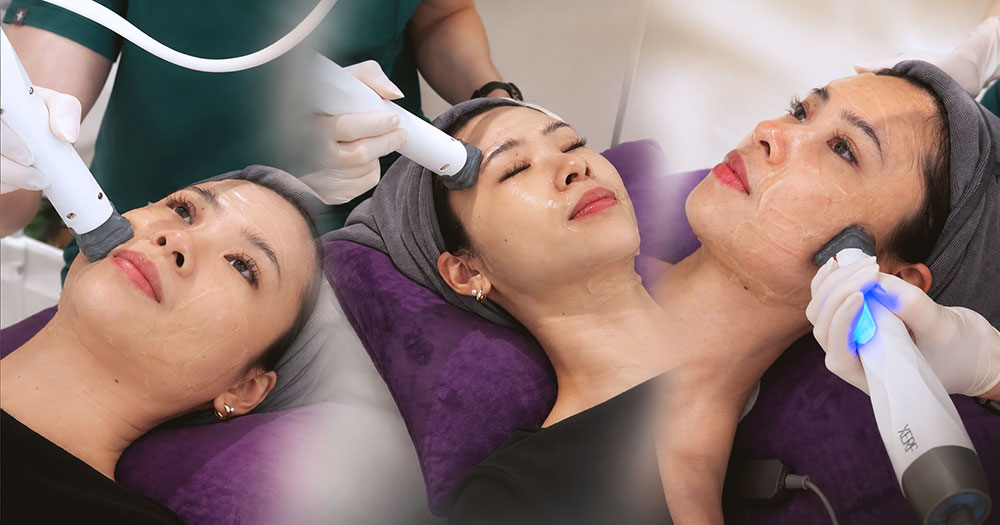
Unlike treatments that rely on needles, XERF delivers radiofrequency energy through the skin surface using a specialised handheld applicator. This makes it a non-invasive treatment option for individuals seeking skin tightening without injections or surgery.
For patients interested in understanding other radiofrequency-based treatments, you may also wish to learn more about RF Microneedling, which combines radiofrequency energy with microneedles to address concerns such as acne scars, enlarged pores, and skin texture.
How Does XERF Work?
Collagen is the body’s primary structural protein and plays an important role in maintaining skin firmness and elasticity. From the mid-20s onwards, collagen production naturally declines. Environmental factors, including Singapore’s year-round ultraviolet (UV) exposure, may further accelerate collagen breakdown, contributing to skin laxity, reduced elasticity, and the gradual development of fine lines.
XERF works by delivering carefully controlled radiofrequency energy into the skin as thermal pulses. These pulses gently heat the dermis, the layer of skin where collagen-producing fibroblast cells are located, while the surface of the skin is continuously protected by an integrated cooling system.
When exposed to appropriate thermal stimulation, fibroblasts may become activated to support the production of new collagen and elastin over time as part of the body’s natural remodelling process. As collagen gradually remodels, patients may notice progressive improvements in skin firmness and definition.
Wave Fit Smart Pulse Technology
One of XERF’s distinguishing technological features is Wave Fit Smart Pulse Technology.
During treatment, the device continuously measures the skin’s electrical resistance (impedance) in real time. Because skin hydration, thickness, and tissue composition vary between individuals, and even between different areas of the same face, this feedback allows the system to automatically adjust each radiofrequency pulse accordingly.
By adapting energy delivery throughout the treatment, Wave Fit technology is designed to provide more consistent energy distribution across varying skin characteristics while helping avoid unnecessary overheating.
Integrated Cryogen Delivery (ICD)
To improve patient comfort, XERF also incorporates Integrated Cryogen Delivery (ICD).
Before and during each radiofrequency pulse, controlled bursts of cooling are delivered to the skin surface. These cooling bursts help protect the epidermis while allowing therapeutic heat to reach deeper tissue layers where collagen stimulation is intended to occur.
The combination of controlled heating and surface cooling is designed to make treatment more comfortable while maintaining consistent energy delivery.
Built-In Surface Temperature Monitoring
XERF also incorporates an automatic surface temperature monitoring system as part of its safety features.
Throughout the procedure, the device continuously monitors the skin’s surface temperature. If the measured temperature exceeds 43°C, the system automatically pauses energy delivery until the skin has cooled sufficiently before treatment resumes.
This automated monitoring helps maintain controlled treatment conditions while supporting patient safety throughout the procedure.
Multi-Depth Skin Tightening
Facial ageing affects more than one layer of the skin. Collagen loss occurs throughout different tissue depths, which is why XERF is designed to deliver radiofrequency energy across multiple levels.
The system offers three treatment depth settings that allow treatment parameters to be customised according to individual skin characteristics and treatment goals.
Shallow Depth
The superficial dermis contains collagen fibres that contribute to skin texture and surface quality.
Treatment at this level is designed to support collagen remodelling within the upper dermis and may assist in improving the appearance of fine lines and overall skin texture.
Middle Depth
The mid-dermis plays an important role in skin elasticity and firmness.
Energy delivered at this depth is designed to support collagen remodelling within these structural layers, which may contribute to gradual improvements in skin firmness over time.
Deep Depth
The deepest treatment setting is designed to target deeper supportive tissue layers associated with facial structure, including tissues near the superficial musculoaponeurotic system (SMAS).
By delivering controlled radiofrequency energy to these deeper layers, XERF is designed to support structural skin tightening and facial contouring in appropriate patients. Individual outcomes vary depending on factors such as age, baseline skin quality, and the degree of skin laxity.
To further individualise treatment, XERF also provides 10 adjustable energy levels, allowing treatment settings to be tailored according to skin thickness, anatomical location, and the patient’s specific concerns following clinical assessment.
Areas That Can Be Treated with XERF
XERF is designed for patients experiencing mild to moderate skin laxity affecting different areas of the face and neck. During consultation, Dr Shirley Kwee will assess your concerns and determine whether XERF is appropriate for the areas you wish to address.
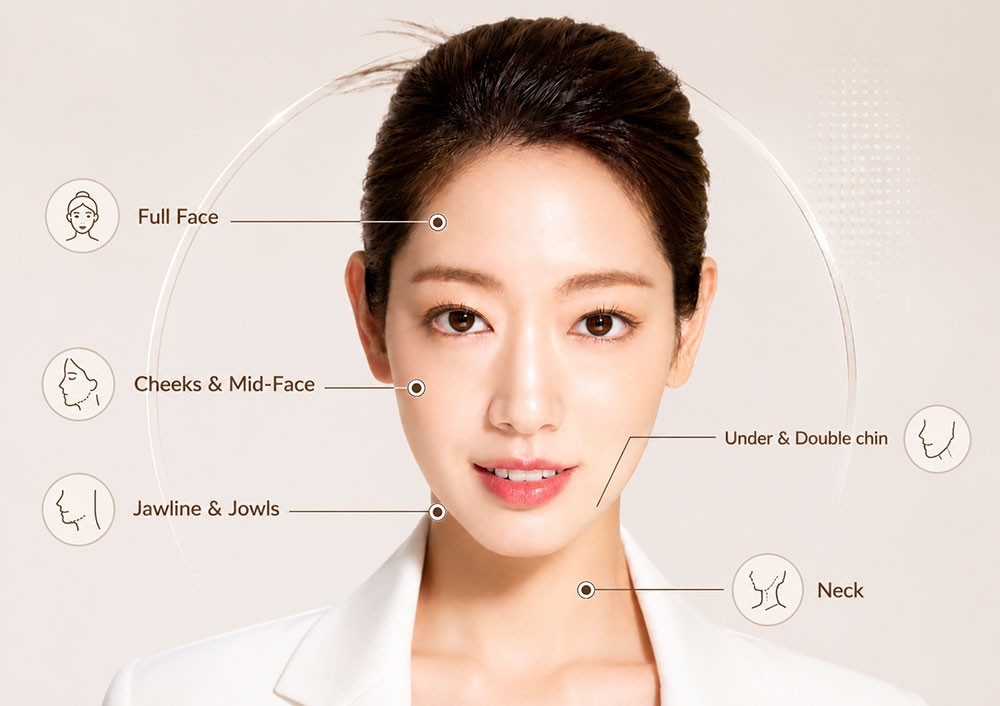
Common treatment areas include:
Full Face
As collagen production gradually declines with age, the entire face may develop reduced firmness and elasticity.
XERF may be used across the full face to support overall collagen remodelling and skin firmness as part of a personalised treatment plan.
Cheeks and Mid-Face
Loss of collagen within the cheeks may contribute to a softer facial appearance over time.
Treatment in the mid-face is designed to support collagen production within the dermis, which may contribute to improved skin firmness and facial definition.
Jawline and Jowls
Early jowling and reduced jawline definition are among the most common concerns associated with age-related collagen loss.
XERF may be suitable for patients seeking a non-surgical treatment that supports collagen remodelling around the lower face and jawline, helping to improve the appearance of mild skin laxity over time.
Under-Chin (Double Chin) Area
Mild skin laxity beneath the chin may reduce the definition between the chin and neck. Learn more about our double chin removal treatments if you're concerned about excess fat beneath the chin.
When clinically appropriate, XERF may be used in the under-chin area to support skin tightening as part of an overall treatment plan for lower facial contour.
Neck
The skin of the neck is naturally thinner than many other facial areas and may show signs of ageing earlier.
XERF can be used to treat mild to moderate neck laxity by delivering controlled radiofrequency energy designed to stimulate collagen remodelling within the treatment area.
Body Applications
Depending on your individual concerns and treatment plan, radiofrequency skin tightening technology may also be used on selected body areas where mild skin laxity is present.
Common areas include the abdomen and upper arms.
For patients whose primary concerns include enlarged pores, acne scars or uneven skin texture in addition to skin laxity, RF Microneedling may be discussed during consultation, as it addresses different skin concerns using a separate radiofrequency treatment approach.
What to Expect Before, During & After XERF Treatment
Knowing what happens before, during and after treatment can help patients feel more prepared for their appointment.
Before Your Treatment
Your consultation begins with an assessment by Dr Shirley Kwee to determine whether XERF is appropriate for your skin concerns and treatment goals.
During the consultation, factors such as:
the degree of skin laxity,
facial anatomy,
skin quality,
medical history, and
previous aesthetic treatments
are reviewed before a personalised treatment plan is recommended.
On the day of treatment, the skin is cleansed to remove makeup, sunscreen and skincare products.
Depending on the treatment area, individual comfort preference and clinic protocol, a topical numbing cream may be applied before the procedure, although with XERF treatment, numbing is not required.
During the Treatment
XERF is performed using a handheld applicator that is placed against the skin to deliver controlled radiofrequency energy.
During treatment, patients typically experience a sensation of warmth, followed by brief cooling bursts from the Integrated Cryogen Delivery system.
The treatment settings can be adjusted throughout the procedure based on patient comfort and the treatment area being addressed.
A typical session generally takes approximately 30 to 45 minutes, depending on the size and number of areas treated.
Most patients are able to tolerate the treatment well and remain comfortable throughout the procedure.
After the Treatment
Following treatment, it is common to experience mild redness or a sensation of warmth, which typically settles within several hours. As XERF is a non-invasive treatment that does not involve needles or surgical incisions, there is minimal downtime, and most patients are able to return to their usual daily activities immediately after their appointment. Make-up can generally be applied on the same day if desired.
For guidance on caring for the skin in the days following treatment, see Aftercare Following XERF Treatment below.
XERF vs Other Skin Tightening Treatments
Several non-surgical treatments are available to address skin laxity. These treatments differ in the type of energy used, the tissue layers targeted, and the skin concerns they are intended to address.
The most appropriate treatment depends on factors such as the degree of skin laxity, skin quality, facial anatomy and individual treatment goals.
Treatment | Technology | Common Treatment Objectives |
XERF | Dual-frequency monopolar radiofrequency | Mild to moderate skin laxity, collagen remodelling and skin tightening |
Radiofrequency with insulated microneedles | Acne scars, enlarged pores, uneven skin texture and mild skin laxity | |
HIFU | High-intensity focused ultrasound | Skin tightening and facial contouring |
Injectable treatments | Injectable medications or dermal fillers | Dynamic wrinkles or facial volume restoration |
Unlike RF Microneedling, XERF delivers radiofrequency energy through the skin surface without the use of needles. RF Microneedling combines radiofrequency energy with insulated microneedles and is commonly used when concerns such as acne scars, enlarged pores or uneven skin texture are present.
High-intensity focused ultrasound (HIFU) uses ultrasound energy rather than radiofrequency. Although both treatments aim to support collagen remodelling, they differ in their mechanisms of energy delivery and treatment characteristics.
Injectable treatments such as dermal fillers and anti-wrinkle treatments address different aspects of facial ageing, including volume loss and dynamic wrinkles. These treatments do not replace collagen-stimulating procedures but may be considered as part of an individualised treatment plan where clinically appropriate.
During your consultation, Dr Shirley will assess your concerns and recommend a treatment approach based on your clinical assessment rather than a single treatment for all patients.
Who is Suitable for XERF?
XERF may be suitable for individuals who are beginning to notice age-related skin laxity and prefer a non-surgical treatment that supports collagen remodelling.
Suitable individuals may include those who:
have mild to moderate skin laxity of the face or neck,
notice reduced jawline definition or early jowl formation,
wish to improve skin firmness without surgery,
prefer a treatment with minimal downtime,
are seeking collagen-stimulating treatment as part of an overall skin ageing management plan.
Suitability cannot be determined based on age alone. During consultation, factors including skin quality, facial anatomy, the degree of skin laxity, medical history and previous aesthetic treatments are assessed before determining whether XERF is appropriate.
XERF may not be suitable for every individual. Patients with certain medical conditions, implanted electronic medical devices, active skin infections within the treatment area or other relevant medical considerations should inform Dr Shirley Kwee during consultation.
XERF and Combination Treatments
Facial ageing is influenced by multiple factors, including collagen loss, changes in skin elasticity, facial volume loss and muscle activity. As these changes occur together, treatment recommendations may involve more than one treatment modality, where clinically appropriate.
Depending on your skin concerns, XERF may be incorporated into an individualised treatment plan alongside other medical aesthetic treatments.
For example, patients whose primary concerns include acne scars, enlarged pores, or uneven skin texture may also be assessed for RF Microneedling, while patients with facial volume loss or dynamic wrinkles may be assessed for injectable treatments where appropriate.
Medical-grade skincare and consistent sun protection may also be recommended to support overall skin health.
Not every patient requires combination treatment. Recommendations are made following an assessment of your skin concerns, treatment goals and clinical findings.
Aftercare Following XERF Treatment
To support the skin during the recovery period, patients are generally advised to:
apply broad-spectrum sunscreen daily,
keep the treated skin adequately hydrated,
avoid prolonged sun exposure where possible,
avoid retinoids, exfoliating acids and other potentially irritating skincare products for several days unless otherwise advised,
avoid excessive heat exposure, including saunas and steam rooms, during the initial recovery period,
follow any additional aftercare instructions provided during consultation.
Collagen remodelling occurs gradually following treatment. Individual responses vary depending on factors such as age, skin quality and the degree of skin laxity.
About Dr Shirley Kwee’s Approach to XERF
Treatment planning begins with a consultation and clinical assessment to determine whether XERF is appropriate for the patient’s concerns.
During the consultation, Dr Shirley evaluates factors including skin quality, facial anatomy, the degree of skin laxity, medical history and previous aesthetic treatments before recommending an individualised treatment plan.
Where appropriate, treatment parameters are adjusted according to the treatment area, skin thickness and clinical findings. If another treatment, or a combination of treatments, is considered more suitable for the patient’s concerns, this will also be discussed during consultation.
Patients are encouraged to ask questions regarding the expected treatment process, possible outcomes, limitations, recovery and follow-up care so that they can make an informed decision regarding treatment.