

How RF Microneedling Improves Skin Texture
Summary:
|
Skin texture concerns are among the most common reasons people seek treatment in Singapore, and also among the most persistent. A consistent skincare routine can improve tone and surface smoothness, but it rarely reaches the structural changes responsible for enlarged pores, acne scarring, or early skin laxity.
RF microneedling treatment in Singapore addresses this by working beneath the surface rather than on it. This article explains how the treatment works, what it is suited to, and what to expect from the process.
How RF Microneedling Works Beneath the Surface
RF microneedling combines two mechanisms that, when used together, allow treatment to reach the deeper layers of skin where many texture concerns originate.
Fine needles create controlled access points in the skin at precise depths. Once positioned, radiofrequency energy is released directly into those layers. This means the thermal energy is delivered to the dermis where it is needed, rather than passing through the outer skin to reach it.
The result is a treatment that can address specific depths associated with scarring, enlarged pores, and early laxity, while leaving the surrounding tissue relatively undisturbed. This precision is what distinguishes RF microneedling from treatments that work only at the skin’s surface.
Learn more about RF microneedling as a facial and body treatment at Cambridge Medical (Somerset).
The Types of Texture Concerns RF Microneedling Is Often Used For
Skin texture concerns vary in how they present and what drives them. The table below outlines the main categories that RF microneedling treatment in Singapore is typically suited to, including how each concern appears, what contributes to it, and how the treatment approaches it.
Concern | How It Presents | Underlying Cause | How RF Microneedling Addresses It | Typical Areas |
Enlarged pores and uneven surface 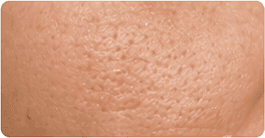 | Visibly wider pores, particularly across the cheeks and nose; rough or bumpy patches that do not improve with exfoliation; dullness from uneven light reflection | Reduced structural support around pores; repeated congestion or oil activity; irregular skin renewal | Delivers energy into the surrounding skin structure to support how pores sit within the skin; encourages more even skin renewal over time | Cheeks, nose, forehead |
Acne scarring 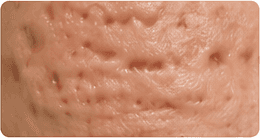 | Rolling scars (shallow, wave-like depressions), boxcar scars (wider indentations with defined edges), shallow ice pick scars (small, localised pits) | Loss of structural support during healing; fibrous bands pulling the surface downward; uneven collagen distribution | Reaches the depths where structural changes sit; helps loosen and remodel uneven tissue; supports gradual rebuilding of the skin’s underlying structure | Face (cheeks, jawline, temples) |
Early skin laxity 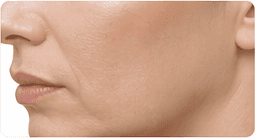 | Fine lines that remain at rest; crepey or slightly crinkled skin, particularly around the eyes or lower face; subtle softening along the jawline | Gradual decline in collagen and structural support; changes in elasticity rather than volume loss alone | Delivers controlled heat into deeper layers where support structures sit; may help improve how the skin holds itself over time | Face, neck, décolletage |
Body texture and stretch marks 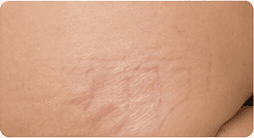 | Stretch marks appearing red, purple, or as lighter lines; crepey or thinning skin; uneven texture following weight changes or pregnancy | Disruption of the skin’s structure during stretching; thinning of the dermal layer; reduced support over time | Targets deeper layers where stretch marks form; supports gradual remodelling; needle depth adjusted for thicker body skin | Abdomen, thighs, arms, flanks |
Who RF Microneedling Treatment Is Suited To
RF microneedling treatment in Singapore is generally suited to those experiencing mild to moderate texture concerns, whether that is enlarged pores, acne scarring, early laxity, or a combination of these. For patients presenting with multiple concerns in the same area, a treatment that targets different depths can address multiple issues in a single session.
It is worth noting what the treatment is not designed for. More significant structural changes, such as pronounced skin laxity or deep volume loss, are generally addressed more effectively by other options. RF microneedling is suited to gradual improvement rather than immediate or dramatic change, and this should be factored into expectations from the outset.
What to Expect During an RF Microneedling Session
Depending on your doctor’s schedule, treatment may take place on the same day as your consultation or be scheduled for a later visit. Before the session begins, your doctor will assess your skin concerns to confirm that RF microneedling is appropriate.
Preparation. A numbing cream is applied before treatment begins to keep you comfortable throughout the procedure.
During the session. The device passes across the treatment area in controlled movements. You may feel light pressure as it moves, a mild prickling from the needles, and a warm sensation as the radiofrequency energy is delivered beneath the surface. Sensation varies across different areas: thinner skin, such as around the eyes, may feel more sensitive than thicker skin, such as the cheeks.
Duration. Most sessions take approximately 30 to 60 minutes, depending on the number of areas being treated.
Recovery and What to Expect Afterwards
In the days following RF microneedling treatment in Singapore, the skin goes through a recovery and renewal phase. Redness, mild swelling, a degree of sensitivity or warmth, and a temporary feeling of dryness or roughness as the skin renews are all common in the first few days and typically settle without intervention.
In the weeks that follow, gradual changes in texture and surface evenness become more noticeable as the skin’s repair processes continue. These improvements develop progressively rather than all at once.
How Many Sessions Are Typically Needed?
Because RF microneedling works with the skin’s natural repair cycle, results build over a series of sessions rather than appearing after one treatment. A course of three to four sessions spaced several weeks apart is commonly recommended, though the specific plan will depend on the concerns being addressed and how the skin responds.
Improvement tends to be cumulative. Each session builds on the changes from the previous one, and the skin’s texture, tone, and overall consistency typically continue to improve over the course of treatment.
Considering RF Microneedling for Your Skin Texture? Start with A Consultation
Skin texture concerns that look similar on the surface can have quite different underlying causes. For one person, rough skin or enlarged pores may be driven by early scarring; for another, it may reflect changes in the skin’s structural support. Understanding what is contributing to your specific concerns is what allows a treatment plan to be matched appropriately.
At Cambridge Medical (Somerset), our doctors assess your skin before making any recommendations to determine whether RF microneedling is suited to your concerns and how it fits within your overall skin care plan.
