
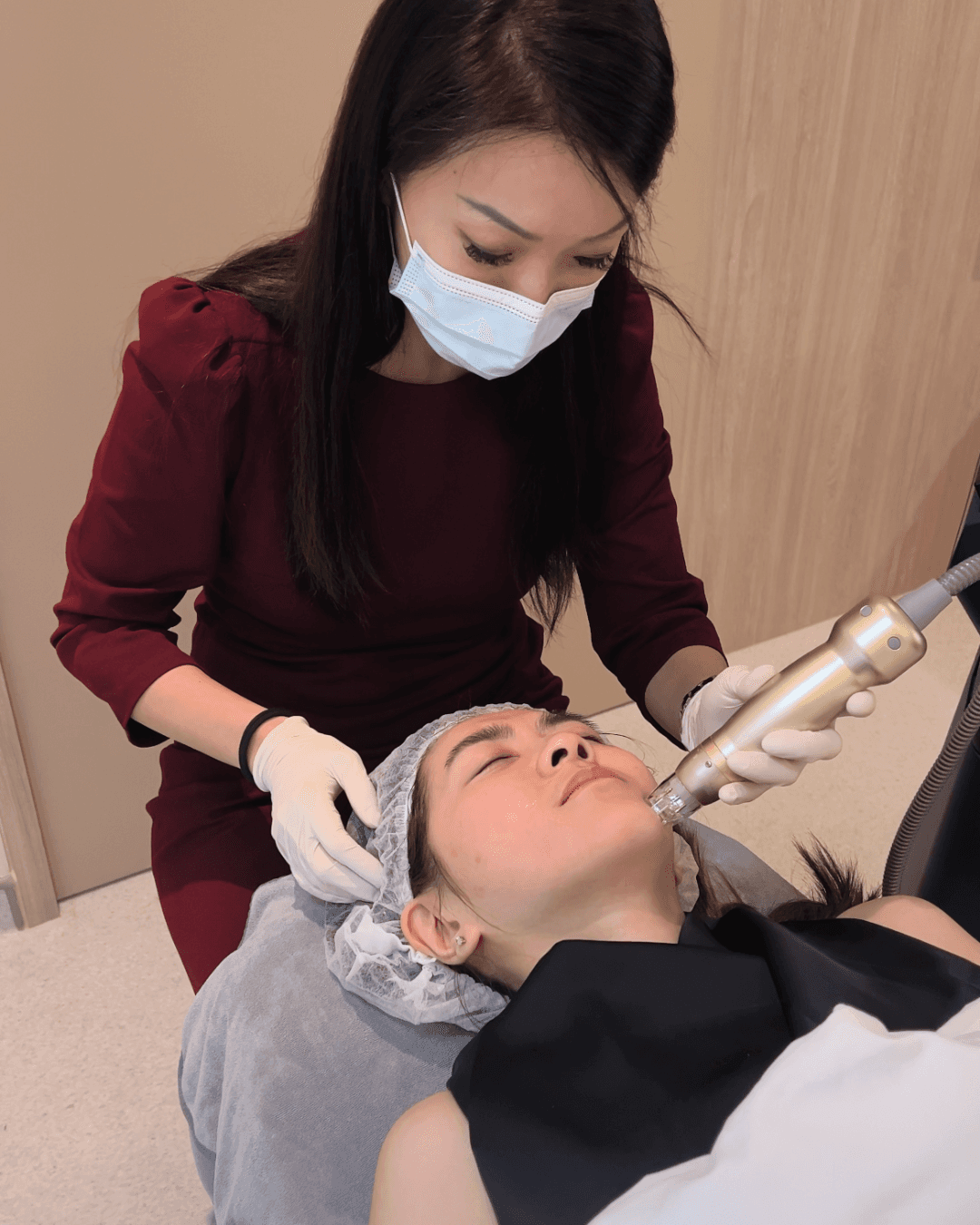
RF Microneedling Treatment in Singapore

It may sound counterintuitive, but improving your skin can start with creating tiny, controlled injuries. That is the basis of microneedling.
Combined with radiofrequency (RF) heat, it becomes a treatment that works beneath the surface of your skin for more sustained results.
RF microneedling is a body and facial treatment at Cambridge Medical (Somerset) that addresses a range of concerns, from uneven texture to stretch marks, in a single, structured treatment plan.
The Science Behind RF Microneedling Skin Rejuvenation
With our RF microneedling treatment in Singapore, we combine two processes that work at different levels of your skin. One creates controlled entry points, while the other delivers energy beneath the surface where structural changes tend to sit.
How Microneedles Deliver Radiofrequency Energy Into the Skin
The device used for this treatment is fitted with ultrafine needles that enter your skin at controlled depths. What matters most is how consistently those needles reach the intended depth, as this determines where the energy is delivered and how evenly the treatment is applied.
As the needles pass through the outer layer, they reach the dermis, where concerns such as acne scars and enlarged pores develop. Once in place, radiofrequency energy is released from the needle tips directly into this layer.
At Cambridge Medical (Somerset), our doctors can adjust two key variables during your RF microneedling session:
Depth, to reach the layer where the concern sits
Energy level, to control how much heat is delivered
This allows us to adjust how each area is treated within the same session, targeting deeper structural concerns in a controlled and adaptable way.
How Controlled Heat Stimulates Collagen and Skin Repair
Once delivered, RF energy generates controlled heat within the targeted layer. This leads to two effects:
A slight contraction of existing collagen, which may contribute to early tightening.
A repair response, where your skin gradually produces and reorganises collagen.
Over time, this process replaces weaker or irregular structures with more organised tissue. Changes tend to appear gradually as your skin remodels.
Because the heat is delivered at specific depths rather than across the entire surface, our doctors at Cambridge Medical (Somerset) can focus on areas that need more structural support without over-treating surrounding tissue.
Skin and Body Concerns RF Microneedling May Address
We typically recommend an RF microneedling treatment when your skin concerns extend beyond the surface. Many visible changes in your skin develop at different depths, which is why they may persist despite consistent skincare.
This treatment is used on both the face and body when texture, structure, or support has changed.
Fine Lines and Skin Laxity
Fine lines and early laxity often develop as your skin loses structural support over time. You may notice this as soft creasing around the eyes, mouth, or forehead, or as a subtle heaviness along the cheeks, jawline, or neck.
These changes are not always due to volume loss. In many cases, the underlying issue is that the skin no longer holds itself as firmly as before, which is why the skin may appear less defined rather than simply wrinkled.
RF microneedling is typically used when these changes are still mild to moderate. It is not designed to replace surgical lifting, but rather to support areas where the skin has started to loosen or fold more easily.
As the skin becomes more supported, areas like the jawline may appear slightly more defined. This is why some people in Singapore associate RF treatments with a recontouring effect, though the treatment itself does not remove fat or change facial structure.
Acne Scars and Uneven Skin Texture
Acne scarring often involves a combination of structural changes beneath the skin. You may be dealing with:
Depressed or pitted scars (where the skin appears indented)
Fibrous bands (where scar tissue pulls the skin downwards)
Irregular texture (where the surface feels uneven or rough)
These changes sit at different depths, which is why one type of treatment may not address everything.
Acne Scar Types Targeted by RF Microneedling
At Cambridge Medical (Somerset), we commonly use RF microneedling for atrophic acne scars, where there’s a loss of support beneath the skin. These include:
Rolling scars (broad, shallow depressions that create a wavy appearance)
Boxcar scars (wider indentations with more defined edges)
Some shallow ice pick scars (narrower, deeper pits closer to the surface)
Uneven Skin Texture Post-Acne
It may also be considered for post-acne changes even after breakouts have settled, such as:
General roughness or uneven texture
Enlarged pores in previously affected areas
Patchy areas where the skin surface no longer appears uniform
Other Types of Scars Addressed by RF Microneedling
Our RF microneedling treatment can also be used to treat:
Surgical or injury scars
General uneven texture from long-term skin damage
Enlarged Pores and Dull Skin
Enlarged pores are often linked to two underlying factors: excess oil and reduced skin support. When pores stretch over time, whether from repeated congestion or gradual loosening of the surrounding skin, they can become more visible and persistent.
Pore size is not just about cleansing or unclogging your skin. Even with a consistent routine, pores may still appear enlarged if the surrounding skin has lost support.
RF microneedling is often used in areas where pores are most noticeable, such as the cheeks, nose, and central face. It may also be considered for skin that appears dull or uneven in tone, particularly when this is linked to texture irregularities rather than pigmentation alone.
In some cases, our RF facial treatment may also help keep oil levels more balanced, reducing the likelihood of clogged pores and breakouts.
Stretch Marks and Body Skin Concerns
Stretch marks form when the skin is stretched beyond its natural capacity, typically during pregnancy or weight changes. This disrupts the underlying structure, appearing as linear marks that may be red, purple, or lighter over time.
These changes go beyond the surface, which is why topical treatments alone often have a limited effect.
We also consider RF microneedling for body skin that appears thinner, crepey, or less supported, particularly in areas that have stretched or lost firmness. Because body skin varies in thickness depending on the area, our doctors at Cambridge Medical (Somerset) adjust the treatment settings to suit each region.
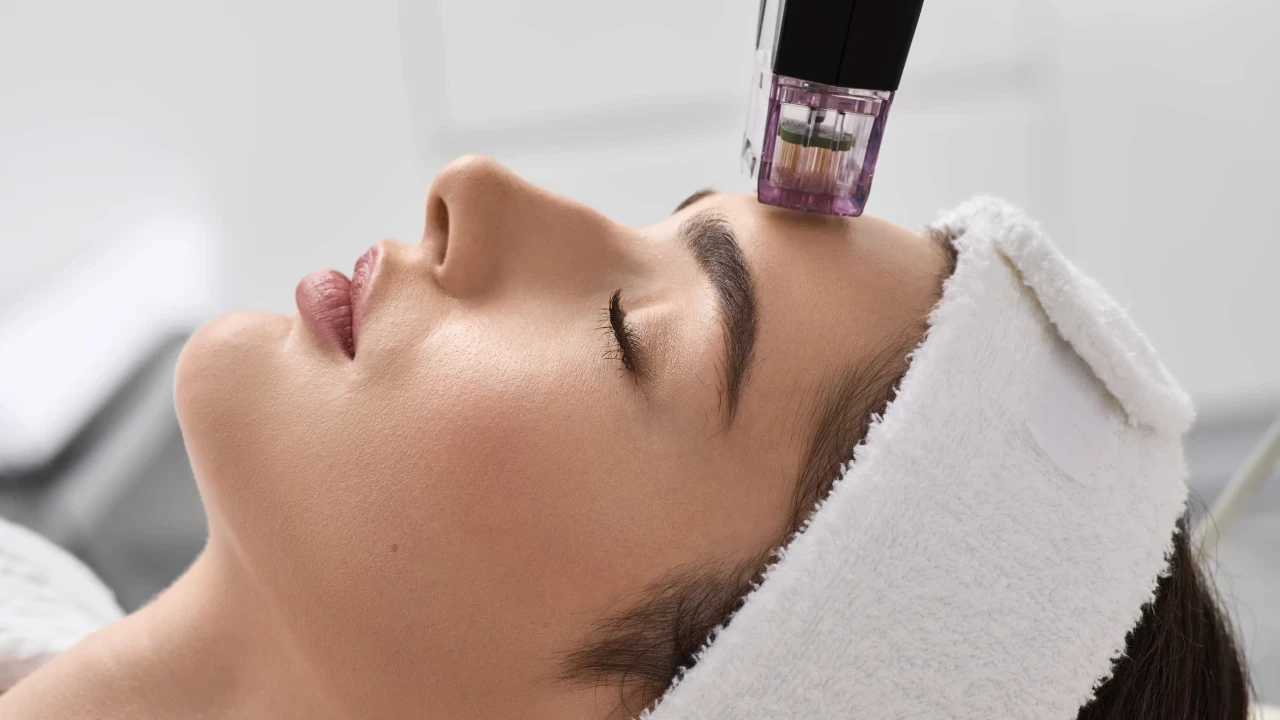
Areas That Can Be Treated With RF Microneedling
Our RF microneedling is not just a facial treatment. Here’s everywhere else it can be used.
Face
The face is the most commonly treated area, especially where early changes in texture or support tend to show first.
Cheeks, where enlarged pores and acne scarring are more common due to higher oil gland activity
Jawline and lower face, where definition may start to soften, or early jowling appears, making the lower face look less sharp or slightly heavier
Under-eye area, where fine lines, crepey skin, and crow’s feet (lines that form at the outer corners of the eyes with expression) tend to form due to thinner skin and frequent movement
Forehead, where horizontal lines and uneven texture develop from repeated expression
Around the mouth, where smile lines (nasolabial folds) and marionette lines (lines running down from the corners of the mouth) develop with repeated movement and gradual skin folding
Neck
The neck is often treated when the skin appears thinner or less supported compared to the face.
Neck lines, typically formed by repeated bending and skin folding
Skin laxity, when the skin starts to look looser or less firm, particularly in the lower neck
This area requires more controlled settings due to thinner skin.
Décolletage (Chest Area)
The chest is frequently exposed to sun, which can lead to visible lines and uneven texture over time.
Chest lines, which are also called “sleep lines,” formed from side sleeping or repeated creasing of the skin
Sun-related skin changes, where the skin appears rough, uneven, or more textured
The skin here is also thin, so we adjust our RF microneedling settings accordingly.
Body
RF microneedling can also be applied to areas of the body where the skin has stretched or changed in structure.
Abdomen, where you may find stretch marks and skin that appears looser after pregnancy or weight changes
Thighs and hips, also where stretch marks or uneven texture may develop
Upper arms, where “crepey skin” or early “loose skin” may develop
Buttocks, for stretch marks or rough, uneven texture
Body areas vary in thickness and density, so our RF microneedling treatment settings are adjusted based on the area and concern.
Not sure which areas need treatment or how they should be approached?
RF Microneedling Compared With Traditional Microneedling
There is no single approach that is better than the other. Our doctors assess each individual's skin condition and concerns to determine which treatment is more suitable.
Traditional Microneedling | RF Microneedling | |
How It Works | Creates controlled micro-injuries to support surface renewal | Combines micro-injuries with radiofrequency energy delivered beneath the surface |
Depth of Treatment | Primarily targets surface and upper dermal layers | Can reach deeper dermal layers where structural concerns sit |
Suitable For | More superficial concerns, such as surface texture and mild tone irregularities | Acne scars, mild to moderate laxity, enlarged pores, and concerns that go beyond the surface |
Session Frequency | Usually repeated more frequently | Sessions are spaced further apart as each session works at a deeper level |
Downtime | Mild redness and sensitivity for a few days | Similar, though recovery may vary depending on depth and areas treated |
Suitable For | Those starting to address skin texture concerns | Those looking to address deeper structural concerns without surgery |
Deeper Collagen Stimulation With Radiofrequency
Traditional microneedling creates controlled micro-injuries to support surface renewal. This is typically sufficient when concerns are more superficial. RF microneedling extends this by delivering energy into deeper layers.
Broader Application for Skin Tightening and Scars
Because of this added stimulation, RF microneedling is generally used when the goal goes beyond surface texture. We consider it for areas that appear less defined, depressed scarring, and situations where multiple concerns need to be addressed together.
You may consider an RF microneedling treatment if you are looking for an approach that works beneath the surface but without surgery.
What Happens During an RF Microneedling Treatment Session?
Your session starts with a consultation, where our doctors assess your skin and decide how the treatment should be adjusted for different areas. This includes selecting the appropriate depth and energy levels for each area's needs.
Before the procedure, a numbing cream is applied to keep you comfortable. This is usually left on for about 20 to 30 minutes.
During the treatment, a handheld device is passed across your skin. You may feel a combination of pressure, warmth, and a light prickling sensation as the needles and energy are delivered.
The session typically takes around 30 to 60 minutes, depending on the size and number of areas treated.
After the treatment, your skin may appear flushed, and some areas may feel slightly warm or tight. This usually settles within the first two days.
Downtime, Recovery, and Aftercare
In the first 24 to 48 hours, you may notice redness, mild swelling, or sensitivity. This is expected and usually settles on its own. Some people also experience light pinpoint marks where the needles entered, though these fade fairly quickly.
Over the next few days, your skin may feel slightly rough or dry as it renews. This is part of the natural recovery process and does not require aggressive exfoliation.
After your RF microneedling session, our doctors will usually advise you to:
Avoid makeup for the first 24 hours
Keep your skincare routine simple and non-irritating
Avoid direct sun exposure and apply sunscreen consistently
Avoid heat-based activities such as saunas or intense workouts for a few days
Our doctors at Cambridge Medical (Somerset) will guide you on how often to repeat the treatment, depending on your skin concerns and your skin's response after each session.
Cost of RF Microneedling in Singapore
The typical price range of an RF microneedling treatment in Singapore is from $500 per session, depending on:
The areas treated: Smaller zones vs full face or body
How deep we need to treat, based on your concern
How many areas we address in one session
The type and severity of your skin concerns
How many sessions you need for visible improvement
Is RF Microneedling Right for You?
If you are dealing with acne scars, enlarged pores, early skin laxity, or uneven texture, RF microneedling allows our doctors to target these concerns at the levels where they actually form.
If you are looking for a step up from surface-level treatments without moving into more invasive options, this may be worth exploring.
Where appropriate, we may also explore alternatives such as laser treatments or skin boosters.
Speak to our doctors at Cambridge Medical (Somerset) to find out if RF microneedling is the right treatment for you.