
Cheek Fillers in Singapore

When your face starts to look flatter or less defined, the change may be traced back to the cheeks, even if it’s not immediately obvious. Because the mid-face sits at the centre of your facial structure, subtle shifts here can influence how your features appear overall.
At Cambridge Medical (Somerset), we don’t treat the cheeks in isolation. Dr Shirley Kwee assesses how volume loss, skin laxity, and facial proportions interact before recommending our cheek filler treatment in Singapore.
Understanding Cheek Fillers
Cheek fillers are injectable treatments designed to restore or enhance volume in the mid-face. Most are made with hyaluronic acid, a substance naturally found in the skin that helps retain moisture and support tissue structure.

How Fillers Support Volume and Structure in the Cheeks
Cheek fillers work by adding volume at targeted depths within the mid-face, where support has been reduced or where additional projection is needed. The type of filler used and whether it's placed closer to the bone or within softer tissue can affect how the cheeks hold their shape. Because the cheeks require robust structural support to lift the facial tissue, doctors typically utilise firmer fillers. These are cohesive gels that hold their shape effectively under the skin without spreading.
Rather than distributing filler evenly, the treatment is typically focused on specific points to build structure in a controlled way. Placement near the upper cheekbone is generally preferred, as injecting too low can result in excess fullness in the wrong areas, a risk sometimes described as "pillow face”.
A key goal of well-executed cheek filler treatment is the restoration of what is sometimes called the Ogee curve, which is the gentle S-shaped contour visible on a youthful face when viewed from an angle. This curve, which sweeps from the outer brow down through the upper cheek and tapers toward the mouth, tends to flatten with age as mid-face volume is lost. Restoring it with filler is one of the central principles guiding Dr Shirley Kwee's approach.
With our clinical team in Singapore, Dr Shirley Kwee plans cheek filler placement based on your existing bone structure and soft tissue distribution, so the outcome aligns with your natural facial shape.
Why Some People Experience Loss of Cheek Volume
Several underlying factors can shape how the mid-face develops and evolves over time.
Natural Ageing and Changes in Facial Fat Pads
As you age, the fat pads in your cheeks gradually shift and reduce in volume. At the same time, collagen and skin elasticity decline, which can make the mid-face appear flatter or less supported. Ageing also causes a gradual reduction in facial bone density, including the cheekbones and surrounding structures. This combination of fat pad loss, collagen depletion, and bone resorption means the face loses both its volume and its underlying scaffolding over time.
Genetic Facial Structure and Naturally Flat Cheeks
In some cases, cheek volume is influenced more by your natural facial structure. You may have a naturally flatter mid-face or reduced cheek projection, even at a younger age. This can affect how defined your cheekbones appear and how your features balance overall. This is particularly common among East Asian patients, who may have a flatter mid-face profile as a genetic characteristic.
Lifestyle and Environmental Factors
Beyond age and genetics, certain lifestyle and environmental factors can accelerate changes to the cheeks. Prolonged UV exposure degrades collagen and elastin in the skin, while smoking restricts blood flow and depletes the skin of nutrients needed to maintain its structure. Significant weight fluctuations can also affect cheek volume, as the skin stretches and contracts with changes in body mass.
How Volume Loss Can Affect Overall Facial Balance
The mid-face plays a central role in supporting surrounding features, so when you lose volume in your cheeks, your under-eyes or smile lines may appear more pronounced. In fact, one of the more overlooked consequences of cheek volume loss is the deepening of the nasolabial folds (smile lines) and marionette lines, as the structures that once supported the overlying skin lose their foundation. The hollowing that forms beneath the eyes, often attributed to genetics or tiredness, can also be worsened by the descent of mid-face tissue.

Ways Cheek Fillers Can Enhance Facial Proportions
Typically, cheek fillers may help to:
Improve the definition of your cheekbone, without relying on makeup or lighting to create shadow and depth.
Restore fullness to the mid-face, especially in areas where volume has reduced.
Create "Apple Cheeks": By adding targeted volume to the front of the mid-face, fillers can help create a softer, heart-shaped appearance.
Support a more balanced facial profile, influencing how your features align from the front and side.
Indirectly soften the appearance of nasolabial folds and marionette lines, by providing the lift and structural support that reduces the downward pull on surrounding skin.
Improve the appearance of the under-eye area, as restoring mid-face volume can reduce shadowing and hollowing near the tear trough region.
Contribute to overall facial harmony when considered alongside other features. The cheeks, nose, and chin together form what is sometimes referred to as the facial "beauty triangle". The balance between these three features plays a significant role in how proportionate and harmonious the overall face appears.
If these adjustments align with what you’re looking for,
the next step is to assess which ones suit your features.
Types of Cheek Fillers
Not all fillers are the same, and the choice of filler can influence how long your results last, how naturally they integrate with your tissue, and whether they can be reversed if needed.
Hyaluronic Acid (HA) Fillers
HA fillers are the most widely used option for cheek enhancement. Because hyaluronic acid is a substance naturally produced by the body, these fillers are well-tolerated, provide immediate visible results, and are reversible, meaning they can be dissolved with an enzyme called hyaluronidase if needed. For cheek contouring, a firmer HA filler is typically selected, as it provides better lift and structural support than softer formulations. HA fillers for the cheeks generally last between 12 to 18 months.
Collagen-Stimulating Fillers
For patients seeking longer-lasting results, collagen-stimulating fillers may be discussed. These include options containing polycaprolactone (PCL) or poly-L-lactic acid (PLLA), which work not only by adding volume but also by gradually stimulating the body's own collagen production. Results from these fillers can last up to 2 to 3 years. The trade-off is that they are not reversible in the same way HA fillers are, and results build more gradually rather than being immediately apparent. These are usually recommended for patients who have already tried HA fillers and are satisfied with their results.
During your consultation, Dr Shirley Kwee will discuss which filler category is most appropriate for your facial structure, treatment goals, and how your body has responded to fillers in the past.
Advantages of Non-Surgical Cheek Enhancement (The Liquid Facelift)
Cheek fillers are less invasive than surgery, so there are no scars and less downtime post-procedure. By strategically injecting filler at the base of the face's retaining ligaments, cheek fillers can act as a "Liquid Facelift", lifting sagging skin and softening lower facial folds without surgery. They are also considerably less invasive than surgical cheek implants, which require general anaesthesia, carry a longer recovery, and risk complications such as implant infection. As faces naturally change with age, a permanent implant may also look different over time, whereas fillers can be adjusted to suit your evolving features.
Cheek fillers can also be tailored to your facial structure. With Dr Kwee at Cambridge Medical (Somerset), the amount of filler used, the placement in the mid-face, and the overall approach can be personalised to achieve your aesthetic goals. A "less is more" philosophy is central to our approach; volume is built up gradually and conservatively, with results reviewed before adding more, to ensure the outcome looks natural and proportionate rather than overdone.
Treatment is usually done in a relatively short session, which makes it easier to fit into a normal day. While you may have some temporary swelling or bruising, many patients can return to their usual activities soon after.
Factors to Consider Before Cheek Fillers Treatment
Before proceeding with cheek fillers, Dr Kwee considers how your features are shaped and what you’re hoping to change.
Your Facial Structure and Skin Condition
The way filler sits in the cheeks depends on your underlying bone structure, existing volume, and skin quality. These factors influence where filler may be placed and how much is appropriate.
What You’re Looking to Change
Your treatment goals guide the approach. Whether you’re looking to improve definition, restore volume, or adjust proportions, being clear about your expectations helps us tailor our approach.
Whether Dermal Fillers Are Suitable for You
Cheek fillers may not be the most appropriate option in every case. For example, if the change in your cheeks is mainly due to skin laxity or downward tissue shift, adding volume alone may not give the outcome you’re expecting. In such cases, skin tightening or lifting treatments like Ultherapy PRIME, High-Intensity Focused Ultrasound (HIFU) or Radiofrequency (RF) may be discussed instead.
What the Cheek Filler Treatment Process Typically Involves
Here’s what you can typically expect when you get cheek fillers at Cambridge Medical (Somerset) in Singapore:
Consultation and Facial Assessment
We begin with a consultation to understand your concerns and assess your facial structure, looking at your:
Cheek projection
Skin quality
Overall proportions
Targeted Injection of Dermal Fillers
Once we’ve determined that cheek fillers are appropriate for you and the right approach, we can schedule an appointment for the procedure.
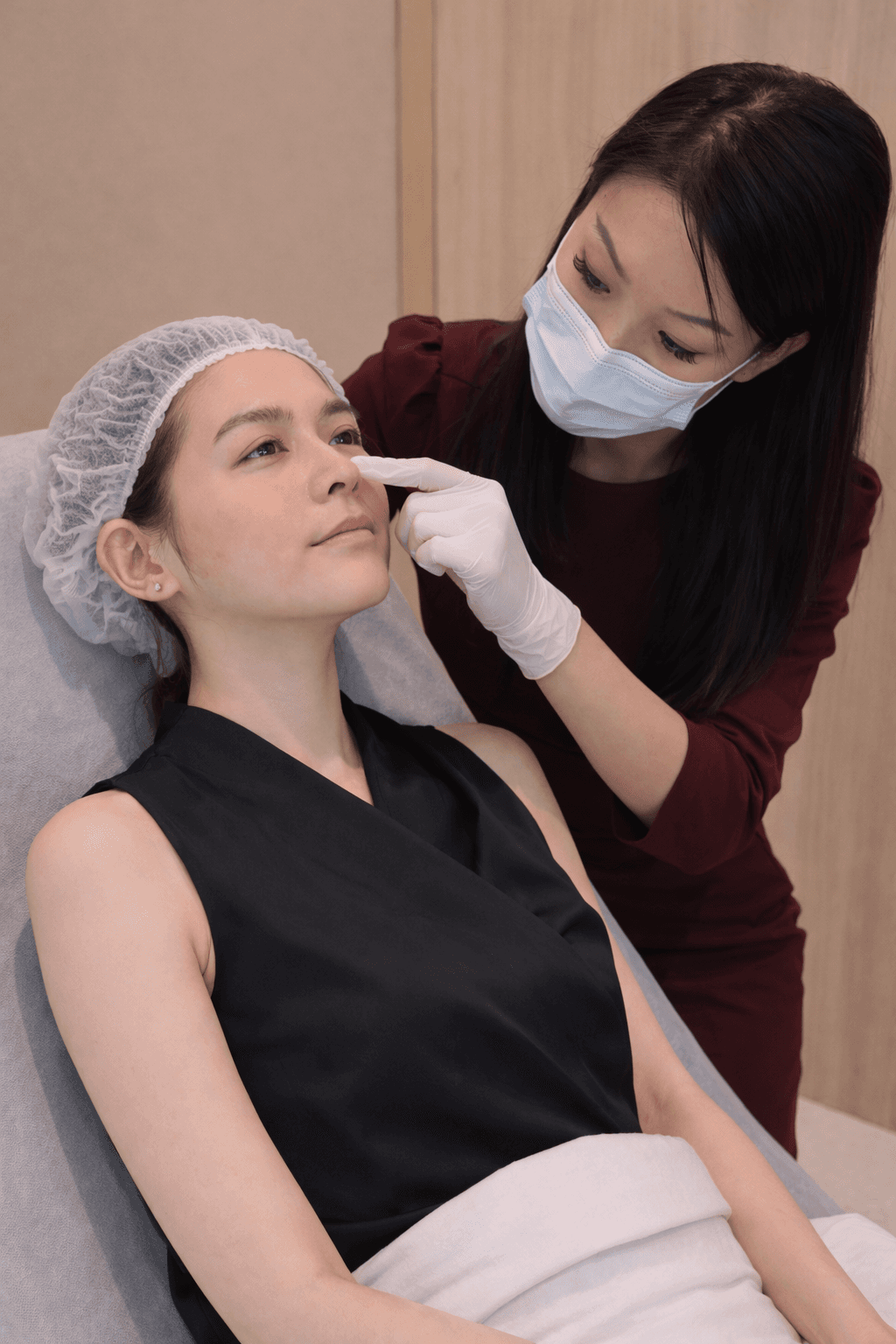
If you proceed, the cheek fillers are placed at specific points and depths in the cheeks. The amount and placement are adjusted during the session based on how the filler sits and how your features respond. On average, mid-face and apple cheek treatments may require between 1.5 to 2.5ml of filler in total, while more targeted cheekbone or lateral cheek enhancement typically requires 1 to 1.5ml. These are general guidelines, and the amount used will always be determined by your individual anatomy and goals during the consultation. To minimise bruising and ensure safety, Dr Kwee frequently utilises a blunt-tipped cannula rather than a sharp needle.
Aftercare and Recovery Considerations
After treatment, you may notice some swelling, redness, or mild bruising in the treated areas. These effects are usually temporary and settle over the next few days, with guidance provided on how to care for the area during this period.
Should You Get a Cheek Filler? Speak to a Professional in Singapore
Cheek fillers can be used in different ways, depending on what you’re looking to adjust. If you’re exploring this option, the next step is to understand how it applies to your specific concerns and whether it aligns with the kind of change you have in mind. A consultation helps put this into context before you decide.
Frequently Asked Questions
Who may be suitable for cheek filler treatment?
You may be a good fit if you’ve noticed your cheeks looking flatter over time, or if your face appears less defined in photos or in certain lighting. Some patients also feel their features look less contoured than before, even when they’re well-rested. Younger patients without significant volume loss may also be suitable if they are seeking enhanced cheekbone definition or a more sculpted mid-face profile. Suitability still depends on what is causing these changes and whether cheek fillers are likely to address them.