Skin Booster Treatment in Singapore

Unlike topical skincare products, skin boosters are a type of injection treatment that works beneath the surface, where hydration, collagen support, and skin repair are regulated.
At Cambridge Medical (Somerset), we offer skin booster injections across different formulations, tailored to your skin condition and concerns. Whether your skin needs hydration, regeneration, or longer-term structural support, our doctors will recommend the approach most suited to you.
What Is a Skin Booster and How Does It Improve Skin Quality?
A skin booster treatment is one of several injectable treatments designed to improve skin quality at the dermal level. Rather than adding volume or reshaping a feature, skin boosters work by improving how the skin functions from within.
They are typically formulated with substances that your skin already uses or responds to:
Hyaluronic acid (HA), which binds and retains water within the dermis
Polynucleotides (PN/PDRN), which support skin repair and regeneration at a cellular level
Poly-L-lactic acid (PLLA), which acts as a biostimulator to encourage collagen production over time
Extracellular matrix (ECM) components, which provide structural proteins and signalling molecules that help maintain the skin's natural scaffolding and support tissue integrity
Other biostimulatory compounds that may support collagen activity or skin recovery
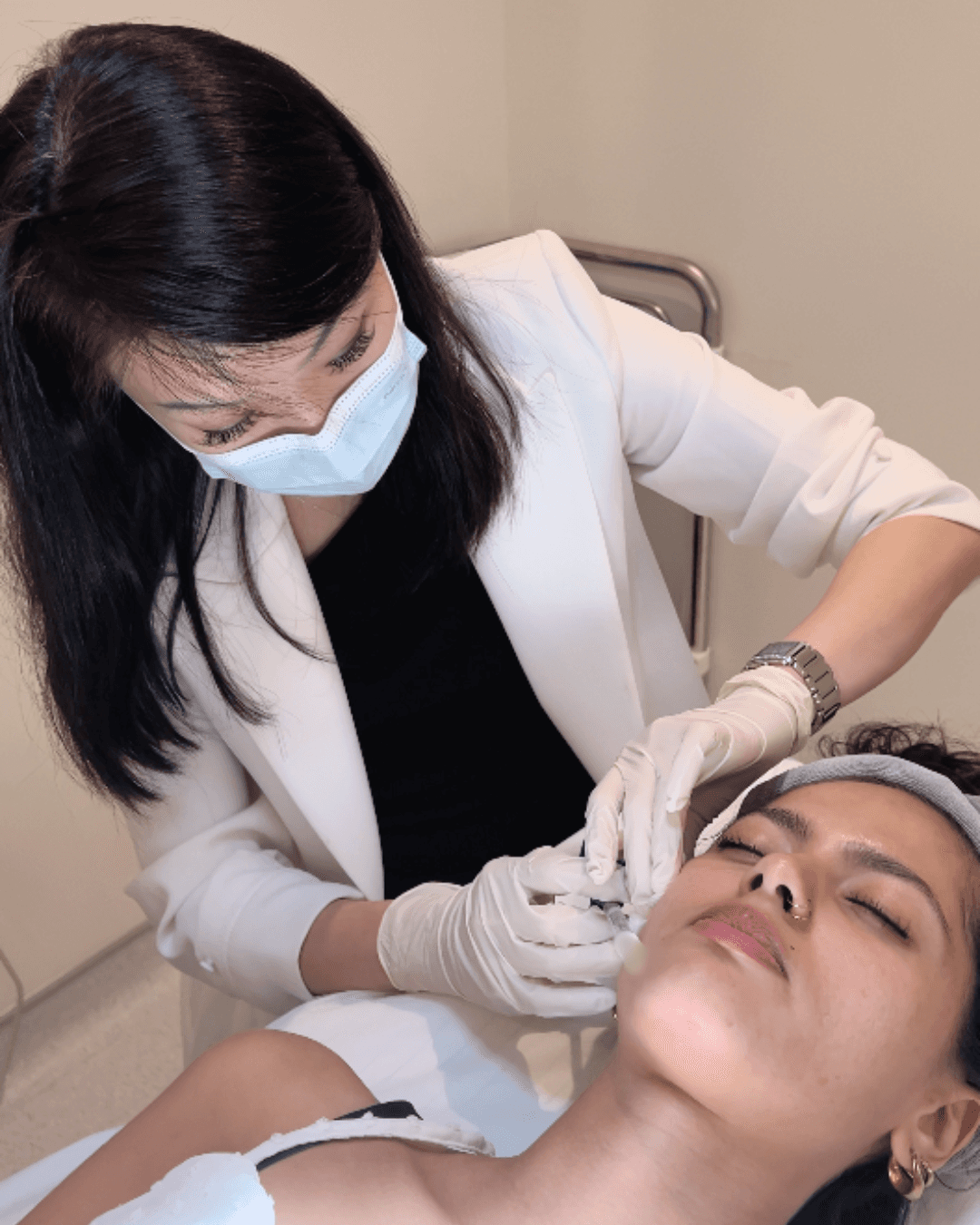
Regardless of the formulation, skin boosters are introduced through micro-injections into the upper to mid-dermis. They spread across the treated area rather than remaining in a fixed point, as dermal fillers typically do. This allows for a more even effect across the skin, rather than a targeted correction of a specific line or feature.
Different formulations work in different ways, and the most suitable one depends on what your skin needs. Our doctors will assess your skin before recommending a formulation.
Hyaluronic Acid (HA) Skin Boosters
Hyaluronic acid is a substance naturally found in your skin that helps it retain water. As you age, HA levels decline, which can contribute to dryness, reduced suppleness, and a less even surface appearance.
When used as a skin booster, HA is introduced into the dermis in a more fluid form than traditional dermal fillers. Rather than adding volume or projection, it disperses throughout the treatment area to improve your skin's ability to hold moisture. The result tends to be skin that looks more even, hydrated, and reflective of light.
HA skin boosters are often considered when the primary concern is hydration or when skin appears dull and lacks bounce, rather than when structural support or cellular repair is the main focus.
Polynucleotide (PDRN) Skin Boosters
Polynucleotides are DNA-derived molecules used in skin treatments to support repair and regeneration. In aesthetic practice, this is often referred to as PDRN (polydeoxyribonucleotide), a purified form commonly derived from salmon DNA for its compatibility with human skin.
When introduced into the skin, PDRN interacts with your cells in a way that may support regeneration. This includes encouraging fibroblast activity (the cells that produce collagen and elastin) and improving the skin's ability to recover from daily stress and environmental damage, such as sun exposure.
PDRN skin boosters are often considered when the goal is to support skin that has become slower to recover or less stable over time, rather than simply replenishing moisture.
PLLA and Collagen-Stimulating Skin Boosters
Poly-L-lactic acid (PLLA) is a synthetic, biodegradable compound that works by stimulating your skin's own collagen production over time. Unlike HA or PDRN formulations, PLLA does not provide an immediate hydration or repair effect. Instead, it gradually stimulates fibroblast activity, leading to a slow, progressive improvement in skin firmness and structure.
This makes PLLA a consideration when the goal is longer-term support, particularly in cases where skin has become thinner or less resilient. Collagen-based skin boosters follow a similar principle, introducing collagen or collagen-precursor compounds directly into the skin to support its structural framework.
Comparing Skin Booster Formulations
HA Skin Booster | PDRN Skin Booster | PLLA Skin Booster | |
Primary Action | Hydration and moisture retention | Cellular repair and regeneration | Collagen stimulation |
Mechanism | Binds water within the dermis | Supports fibroblast activity via receptor pathways | Biodegradable compound triggers collagen production |
Onset of Results | Relatively early, as hydration improves | Gradual, over a series of sessions | Slow and progressive over weeks to months |
Best Suited For | Dryness, dullness, loss of skin bounce | Skin fatigue, uneven recovery, early ageing | Skin thinning, longer-term firmness support |
Duration | May last up to several months | May last up to several months | Tends to be more sustained due to collagen rebuilding |
Difference Between Skin Booster Injections and Dermal Fillers
Skin booster injections and dermal fillers are both injectable treatments, but they are used for different purposes and placed at different depths within the skin.
Skin boosters are used when changes are seen across an area of skin, for example, when the skin appears less even, less refined, or shows early creasing. The focus is on improving overall skin quality, with changes that may become more noticeable over a series of sessions.
Dermal fillers, on the other hand, are used to restore lost volume or enhance definition in areas such as the cheeks, chin, or jawline. You may notice a visible change immediately after the procedure.
Skin boosters may also be considered alongside treatments like microneedling or laser procedures.
The difference is in how the effect is achieved: skin boosters introduce a formulation directly into the skin for internal support, while microneedling or laser treatments trigger a repair response through controlled skin injury.
How Skin Booster Treatment Works
Skin booster treatments at Cambridge Medical (Somerset) work in stages once placed into the skin, though the specific mechanism depends on the formulation used.
How the Treatment Is Placed Within the Skin
The product is deposited in multiple small points across the treatment area so it can sit within the dermal tissue rather than form a single concentrated pocket. The aim is not to create bulk or projection, but to expose the skin more evenly to the formulation across the treated area.
How Each Formulation Interacts with Your Skin
HA formulations begin to support hydration relatively soon after placement, as the molecules attract and bind water within the dermis.
PDRN begins to interact with the local tissue environment through pathways linked to wound healing and inflammatory control, supporting skin that has become slower to recover or more susceptible to cumulative stress.
PLLA works more gradually, prompting a slow collagen-building response over weeks to months as the body breaks it down.
ECM formulations introduce structural proteins and signalling molecules that integrate with the existing dermal matrix, providing a scaffold that supports cellular interaction, tissue organisation, and longer-term skin integrity.
Skin Response After the Skin Booster Injection
What follows is not one instant change, but a series of smaller biological responses. These may include:
Support for cell turnover
Tissue recovery and hydration
A skin environment that is more favourable for repair and collagen rebuilding
Because these changes happen within ongoing skin cycles, a series of sessions helps you achieve and maintain your intended results. This is also why the result tends to look understated rather than immediately dramatic.
Different areas of the face do not recover at the same pace. Thinner or more mobile areas, such as around the eyes or lower face, often show signs of skin fatigue earlier and may require a different approach than fuller or less expressive areas.
At Cambridge Medical (Somerset), our doctors adjust the formulation, number of sessions, spacing, and product volume based on where it is being placed and the condition of your skin in that area.
Common Skin Concerns Treated with Skin Booster Injections
Skin booster injections are often considered when changes in your skin start to reflect your age, lifestyle, or cumulative exposure to environmental stress.
Dehydrated or Dull Skin
In your 20s, skin boosters are often used to support hydration levels and improve overall radiance, especially if your skin appears tired despite regular skincare. An HA-based formulation is commonly considered here, as restoring moisture is often the primary goal at this stage. You may notice your skin looking more refreshed and balanced rather than flat or lacklustre after treatment.
Acne Scars and Uneven Skin Texture
In your 30s, you may begin to notice lingering acne marks, uneven texture, or fine irregularities becoming more visible. PDRN-based skin boosters are often considered in these cases, as their regenerative properties may help improve the evenness of your skin's appearance over a series of sessions.
Early Signs of Skin Ageing
From your 30s onwards, early signs of ageing such as fine lines, reduced firmness, and slower skin recovery may become more noticeable. PDRN or HA formulations may be used to support overall skin condition at this stage.
In your 40s and beyond, concerns may extend to deeper lines, reduced elasticity, and areas where the skin appears thinner or less supported. PLLA or collagen-stimulating formulations may be considered here, given their focus on longer-term structural support.
Skin boosters may be used across these stages to support overall skin condition, particularly in areas where changes are more visible or progressive.
Not sure what your skin needs next? Start with a professional assessment.
Our doctors will tailor your skin booster treatment at Cambridge Medical (Somerset).
How Long Do Results Last?
Results from a skin booster injection in Singapore may last up to several months, depending on the formulation used, your skin condition, age, and lifestyle. PLLA-based formulations may offer more sustained results given the nature of the collagen-building response.
Because the effects develop gradually and are influenced by your skin's natural renewal cycle, our doctors may recommend maintenance sessions to sustain your results over the long term.
Areas Commonly Treated with Skin Booster Treatment
Face
Forehead
Cheeks
Temples
Under-eye area
Nasolabial folds (laugh lines)
Jawline
These areas are constantly involved in facial movement, such as expressions, speaking, and daily muscle activity. Over time, repeated skin folding, combined with gradual loss of support, can lead to fine lines or uneven skin texture.
Neck
Horizontal neck lines
Creases
Necklines often form from repeated bending and compression of the skin, for example, from looking down at a device or from natural head movement throughout the day. As the skin becomes less resilient, these lines can remain visible even when the neck is at rest.
Décolletage (Chest Area)
Upper chest
Cleavage lines
Lines in the chest area are commonly linked to a combination of sun exposure, sleeping positions such as side sleeping, and the natural way the skin folds in this region. Over time, these repeated patterns can lead to more fixed creases and a more textured appearance.
Hands
Back of hands
The hands are exposed to environmental factors such as UV radiation and frequent washing, and they also have naturally thinner skin. Over time, this can make lines and texture changes more noticeable.
Benefits of PDRN Skin Booster Treatment
Supporting Skin Repair and Regeneration
PDRN skin boosters are often considered when your skin no longer recovers as efficiently as before. By supporting the skin's natural repair process, this injection treatment may help shorten your recovery time in these situations.
Improving Hydration, Elasticity, and Skin Texture
PDRN skin boosters may help restore a more balanced skin state, especially in areas that previously showed early signs of change.
What to Expect During and After a Skin Booster Injection Session
A skin booster session at Cambridge Medical (Somerset) is typically done as an in-clinic procedure and does not require hospitalisation.
During Your Treatment
Our doctors will begin with a consultation to review the areas being treated, confirm the most suitable formulation, and finalise your treatment plan. Your skin is then cleansed before the procedure begins.
A topical numbing cream may be applied to improve your comfort during the procedure, depending on your treatment plan.
The treatment itself involves a series of controlled injections across the selected areas. Depending on the extent of treatment, the session may take around 20 to 30 minutes.
After Your Treatment
After the session, you may notice small raised bumps at the injection points. These are expected and typically settle within a few hours to a day as the product integrates into the skin.
Mild redness, swelling, or pinpoint marks can also occur, especially in more delicate areas. These effects are usually temporary and tend to resolve within a few days.
Recovery and Aftercare
You will be able to return to daily activities with minimal downtime following your session. You may be advised to:
Avoid strenuous exercise, saunas, or heat exposure for the rest of the day
Avoid applying makeup for at least 12–24 hours
Avoid touching or applying pressure on the treated areas
Our doctors will provide specific aftercare instructions based on your treatment plan and the formulation used.
Get a Skin Booster Treatment Tailored to Your Skin
If you are noticing changes in your skin that no longer respond to topical skincare, it may be worth exploring a skin booster injection in Singapore.
Our doctors at Cambridge Medical (Somerset) will assess your skin and recommend the most appropriate formulation and treatment plan for your concerns. Book a consultation with us to get started.