
16 Apr 2026
Common Causes of Hyperpigmentation and Treatment Options in Singapore
Summary:
Hyperpigmentation is caused by excess melanin triggered by sun exposure, hormones, inflammation, or genetics.
The main types are post-inflammatory hyperpigmentation, melasma, sunspots, and freckles.
Laser treatments are commonly used to target and break down pigmentation in the skin.
Common Causes of Hyperpigmentation and Treatment Options in Singapore
Uneven skin tone is one of the more persistent skin concerns and is often misunderstood. Dark spots and patches can appear for a range of reasons, and the approach to treating them depends on understanding which type of pigmentation is present and what is driving it.
This article covers the main types of hyperpigmentation, the factors that trigger them, and the laser-based hyperpigmentation treatment options available in Singapore.
Why Hyperpigmentation Appears on the Skin
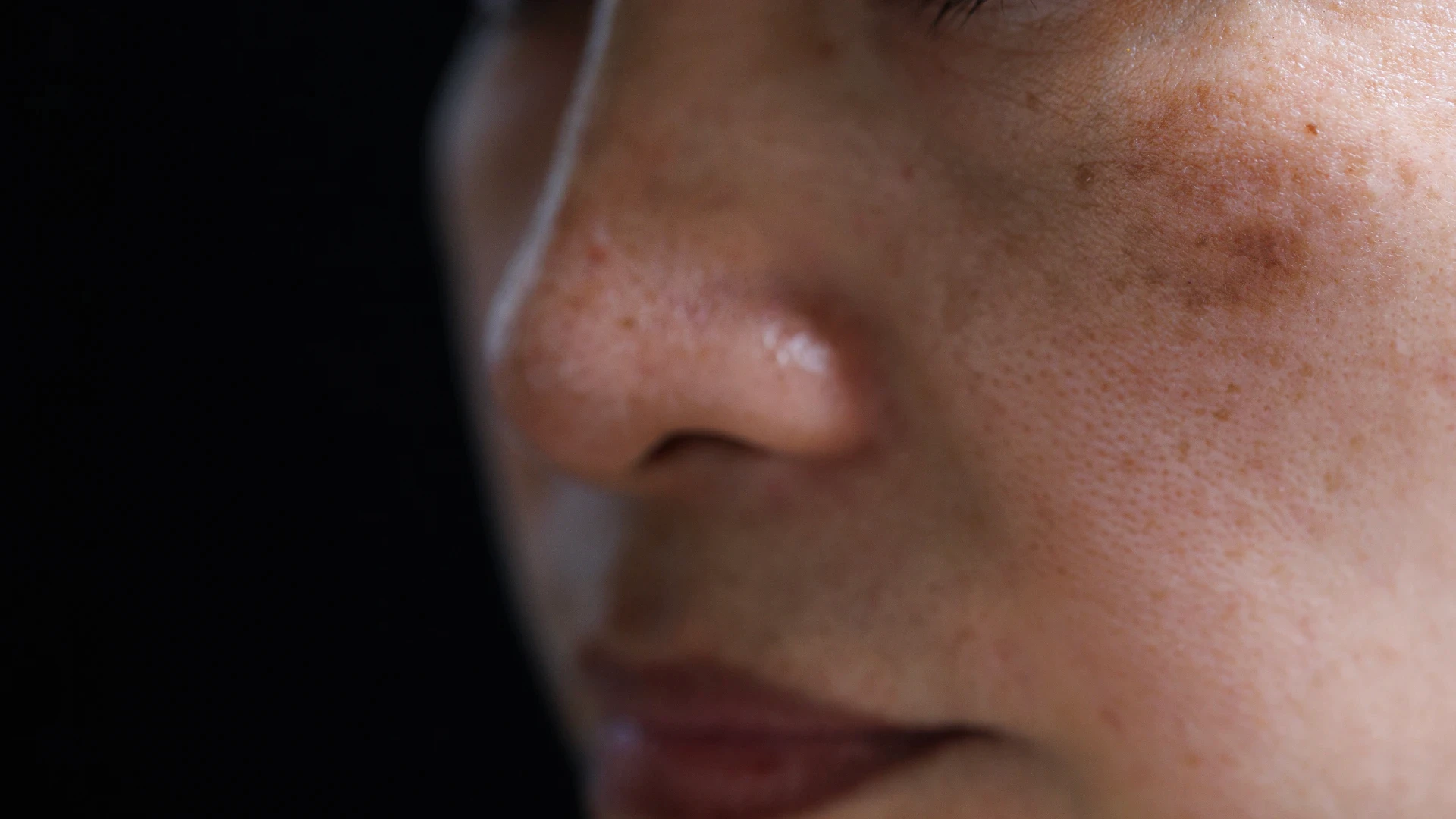
Hyperpigmentation occurs when the skin produces excess melanin in certain areas. Melanin is the pigment responsible for skin colour, produced by cells called melanocytes. When these cells become overactive, dark spots or patches develop that contrast with the surrounding skin.
This overproduction is usually the skin’s response to some form of stress, whether that is UV exposure, inflammation, hormonal change, or injury. In this sense, pigmentation is often a sign that the skin’s natural defence or repair systems have been activated.
The depth at which pigment sits within the skin also matters. Superficial pigmentation tends to appear sharper and more defined, while deeper pigment looks more diffuse. This distinction affects how quickly spots fade and whether they respond to surface-level skincare or require more targeted treatment.
Factors That Can Trigger Hyperpigmentation
Dark spots that look similar on the surface can have quite different underlying causes. Understanding what drives pigmentation is an important part of choosing the right treatment approach.
Sun Exposure (UV Radiation)
Ultraviolet exposure stimulates melanocytes to produce more pigment as a protective response. With repeated exposure over time, this process can become uneven, leading to concentrated areas of excess melanin.
Because the effect accumulates gradually, sun-related pigmentation typically develops slowly rather than appearing suddenly.
Hormonal Changes
Hormonal fluctuations can increase melanocyte activity, making the skin more prone to developing pigmentation. This is commonly seen during pregnancy or with the use of hormonal medications.
Because the trigger is internal, hormonally driven pigmentation can be more difficult to manage and more likely to recur.
Skin Inflammation or Injury
When the skin becomes inflamed, whether from acne, irritation, or minor injury, it can produce additional pigment during the healing process. These marks are known as post-inflammatory hyperpigmentation (PIH), and sometimes persist long after the original inflammation has resolved, particularly in skin that is more reactive or prone to post-inflammatory responses.
Genetic Predisposition
Some individuals are genetically more prone to developing pigmentation. Their melanocytes respond more readily to triggers such as sun exposure or inflammation, meaning pigmentation can appear in response to relatively mild stimuli.
Medical Conditions and Medications
Certain medical conditions and medications can alter how the skin produces or distributes melanin, either by increasing melanocyte activity or by changing how the skin responds to external factors. Addressing pigmentation in these cases often requires managing both the visible changes and the underlying cause.
The Main Types of Hyperpigmentation
The four main types of hyperpigmentation are post-inflammatory hyperpigmentation, melasma, sunspots, and freckles. Each presents differently and responds differently to treatment approaches.
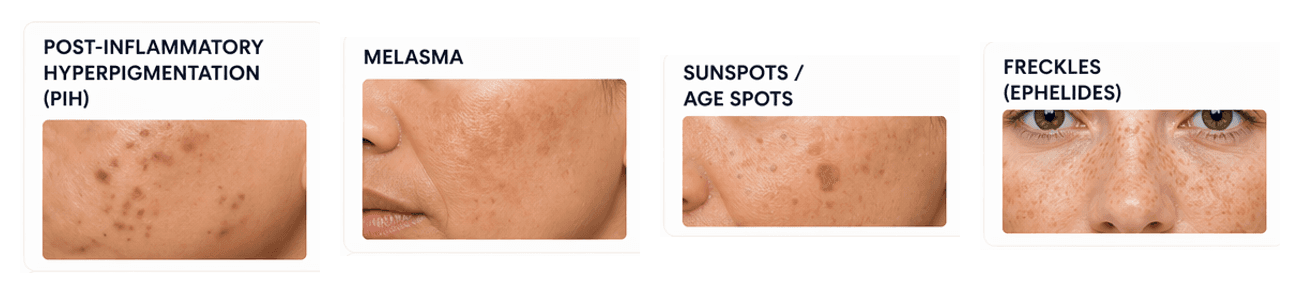
Type | How It Presents | Common Triggers | Common Areas | Behaviour Over Time |
Post-Inflammatory Hyperpigmentation (PIH) | Flat dark marks following the exact area of previous inflammation; colours from light brown to grey-brown | Acne, eczema, insect bites, burns, and picking at the skin | Face (cheeks, jawline), back, chest | May fade over time; can persist if the underlying cause is not addressed |
Melasma | Diffuse, uneven patches with less defined borders; often symmetrical across both sides of the face | Pregnancy, hormonal medications, hormonal fluctuations, combined with sun or heat exposure | Cheeks, forehead, upper lip, jawline | Can fluctuate; tends to worsen when triggers continue |
Sunspots / Age Spots | Well-defined, round or oval brown spots that are uniform in colour | Cumulative UV exposure over time | Face, hands, forearms, shoulders, and other sun-exposed areas | Generally stable; do not fade without treatment |
Freckles (Ephelides) | Small, light-to-medium brown spots appearing in clusters rather than as isolated marks | Genetic predisposition; visibility increases with sun exposure | Cheeks, nose, upper face | Darken with sun exposure; can lighten with sun avoidance |
Hyperpigmentation Treatment Options Available in Singapore
Doctors use different types of laser treatments depending on how deep the pigment is, where it’s located, and how your skin reacts to heat or irritation.
Laser | How It Works | Pigment Depth Targeted | Suited For | Why It’s Used | When It’s Considered |
Pico Laser | Ultra-short pulses break down pigment via a photoacoustic effect, with less reliance on heat | Superficial to mid-dermal | Freckles, sunspots, post-inflammatory marks | Targeted pigment breakdown with controlled energy delivery | When direct targeting is needed without excessive heat stimulation |
Q-Switched Laser | High-intensity pulses in very short durations fragment pigment directly | Superficial | Freckles, sunspots, and some cases of PIH | An established approach for fragmenting localised pigment | When treating defined spots or more widespread superficial pigmentation |
Real-time pigment mapping adjusts energy delivery based on depth and density | Variable; adapts to pigment profile | Sunspots, age spots, freckles, UV-induced pigmentation | Adaptive energy delivery suited to varied or uneven pigmentation distribution | When pigmentation varies across the skin or requires more controlled targeting | |
Yellow Laser | Wavelength absorbed by both melanin and blood vessels associated with pigment production | Superficial; also targets the vascular component | Melasma or pigmentation with associated redness | Addresses both pigment and vascular activity that can drive recurrence | When pigmentation is heat-sensitive or prone to returning |
Fractional BB Laser | Targets the basal layer where melanin is produced while preserving the outer skin barrier | Basal layer (deep epidermal) | Melasma, freckles, widespread uneven tone | Supports gradual pigment clearance alongside skin renewal | When pigmentation is diffuse rather than localised |
Hybrid (Dual-Wavelength) Laser | Combines multiple wavelengths to address pigment at different depths in one session | Multi-depth | Mixed pigmentation, e.g. melasma with sunspots or PIH | Allows different layers of pigment to be treated simultaneously | When more than one type of pigmentation is present |
To find out which laser is suited to your type of hyperpigmentation, book a consultation with our doctors at Cambridge Medical (Somerset).
When Combination Treatments Are Considered
Laser treatments for hyperpigmentation in Singapore are sometimes combined with other options, such as chemical peels or RF microneedling, when there are additional concerns to address alongside pigmentation.
This might be relevant when skin texture is also a factor, or when ongoing inflammation is contributing to new pigment formation.
Maintaining Even Skin Tone After Hyperpigmentation Treatment
Treating existing pigmentation is only part of the picture. Managing the factors that drive it is equally important to prevent new marks from forming or existing ones from returning.
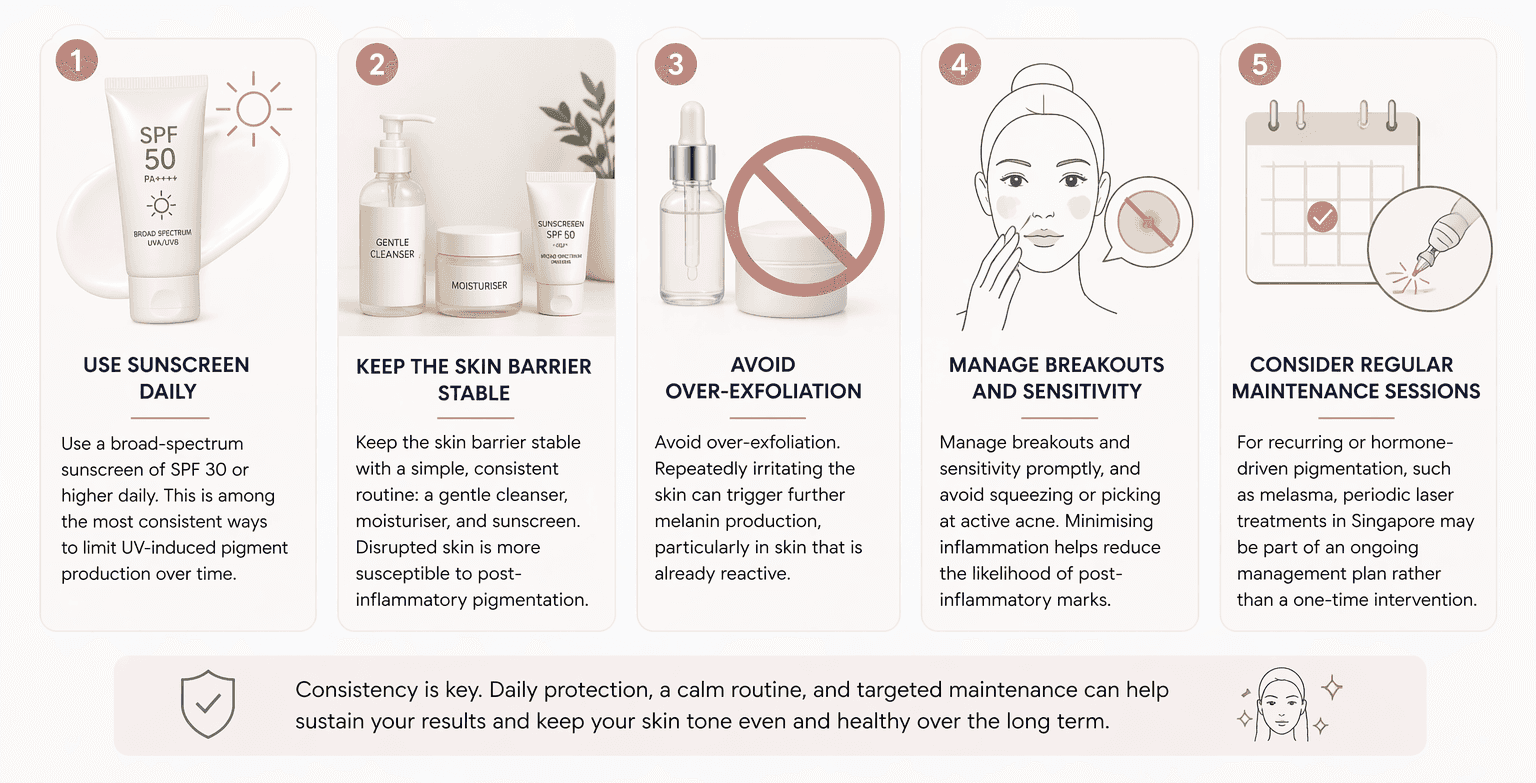
Use a broad-spectrum sunscreen of SPF 30 or higher daily. This is among the most consistent ways to limit UV-induced pigment production over time.
Keep the skin barrier stable with a simple, consistent routine: a gentle cleanser, moisturiser, and sunscreen. Disrupted skin is more susceptible to post-inflammatory pigmentation.
Avoid over-exfoliation. Repeatedly irritating the skin can trigger further melanin production, particularly in skin that is already reactive.
Manage breakouts and sensitivity promptly, and avoid squeezing or picking at active acne. Minimising inflammation helps reduce the likelihood of post-inflammatory marks.
Consider regular maintenance sessions. For recurring or hormone-driven pigmentation, such as melasma, periodic laser treatments in Singapore may be part of an ongoing management plan rather than a one-time intervention.
Find the Right Approach for Your Pigmentation Type at Cambridge Medical (Somerset)
Effective hyperpigmentation treatment in Singapore starts with understanding the type, depth, and underlying cause of the pigmentation.
At Cambridge Medical (Somerset), we assess these factors before recommending a treatment plan, whether that involves a single laser technology or a combination approach tailored to your skin's response over time.
If you’re thinking about hyperpigmentation treatment in Singapore, contact us to book a consultation.