A Complete Guide to Skin Booster Treatments in Singapore
Summary:
|
Wanting healthier, better-looking skin is a common goal, but what that means is different for everyone. The concerns most people want to address are rarely just one line, spot, or feature. They tend to be collections of changes that regular skincare products cannot fully achieve.
This is where skin booster treatments can play a role. This guide covers what skin boosters are, how they work, and how to determine which type may suit your skin.
Regeneration Is the New Focus of Aesthetic Treatments
Many aesthetic treatments today are moving beyond visible correction. Rather than focusing solely on filling, lifting, or reshaping, the emphasis has shifted to how the skin functions beneath the surface: how well it retains moisture, produces collagen, and recovers from daily stressors such as sun exposure, inflammation, and the gradual effects of ageing.
When these processes slow down, the changes tend to be subtle but affect the face as a whole. The skin may look less even, feel less stable, or take longer to recover after breakouts or irritation. Rather than a single clear problem, it presents as an overall decline in the skin's ability to maintain itself.
Regenerative treatments like skin boosters are designed for this purpose. They use ingredients the skin already recognises, such as hyaluronic acid, polynucleotides, and collagen-stimulating compounds, to support these processes from within the dermis.
What Are Skin Boosters and What Do They Do?
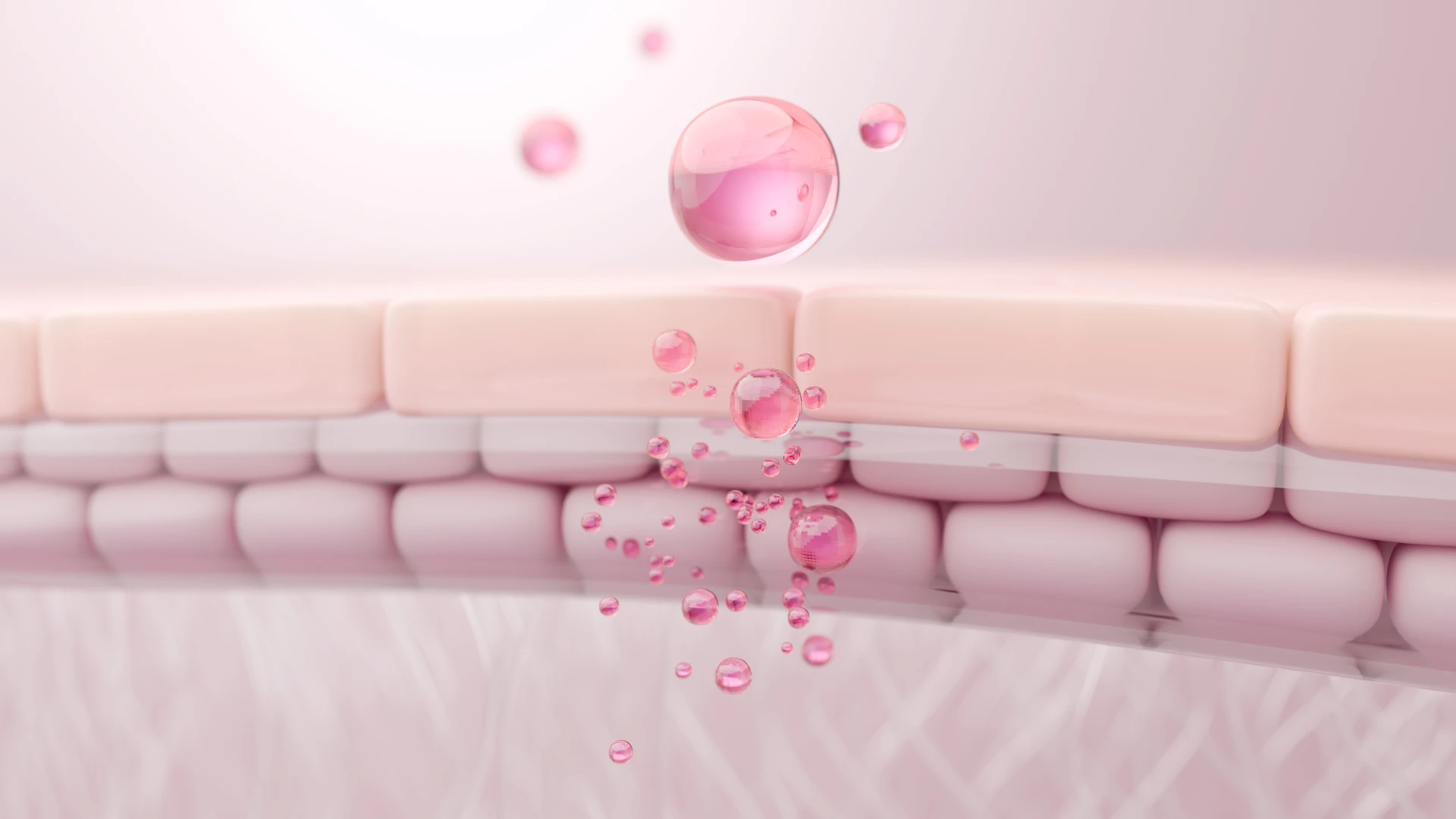
A skin booster is an injectable treatment that works at the layer of skin where its internal balance is managed. Rather than sitting on the surface or altering facial structure, small amounts are injected directly into the dermis, where they work with the tissue responsible for hydration, cell activity, and collagen support.
The result is not a single, visible change, but a gradual improvement in how the skin behaves throughout the treated area. The types of skin booster injections used in Singapore are selected based on how well they support these internal processes. Each formulation works differently, but all are biodegradable and designed to work with the skin’s natural systems.
Polynucleotide (PDRN) Skin Boosters
A PDRN skin booster works more directly with the skin’s natural repair process. Polynucleotides support the skin’s recovery signals, influencing fibroblast activity and the skin's healing after environmental stress or repeated irritation. Rather than correcting one visible issue, this treatment helps the skin become more stable over time.
The result tends to be a calmer, more even appearance rather than one specific, immediate change.
Collagen-Stimulating Skin Boosters (PLLA)
PLLA-based skin boosters work over a longer timeframe. As the PLLA gradually breaks down, it encourages the skin to produce more collagen, a process that unfolds over several weeks to months and helps strengthen the skin’s underlying structure.
Rather than changing the surface appearance immediately, this treatment supports the skin’s ability to maintain its shape and firmness over time.
The distinction between these three types lies in where each one acts within the skin’s natural cycle: hydration, recovery, or structural support. What they share is how results develop: gradually and evenly across the treated area, in step with the skin’s own processes.
Hyaluronic Acid (HA) Skin Boosters
Hyaluronic acid primarily supports the skin’s ability to retain moisture. When injected into the dermis, it binds to water and distributes it more evenly through the skin, improving deep hydration rather than surface-level moisture.
Over time, this can affect how light reflects off the skin and how smooth it feels, particularly in areas with fine lines or uneven texture.
How to Tell Which Type of Skin Booster Your Skin May Need
At Cambridge Medical (Somerset), we choose a skin booster based on what your skin needs most, whether it’s hydration, recovery, or long-term support. The following provides a general guide to how these concerns typically present.
To get advice tailored to you, book an appointment with us.
When Hydration Is the Main Concern
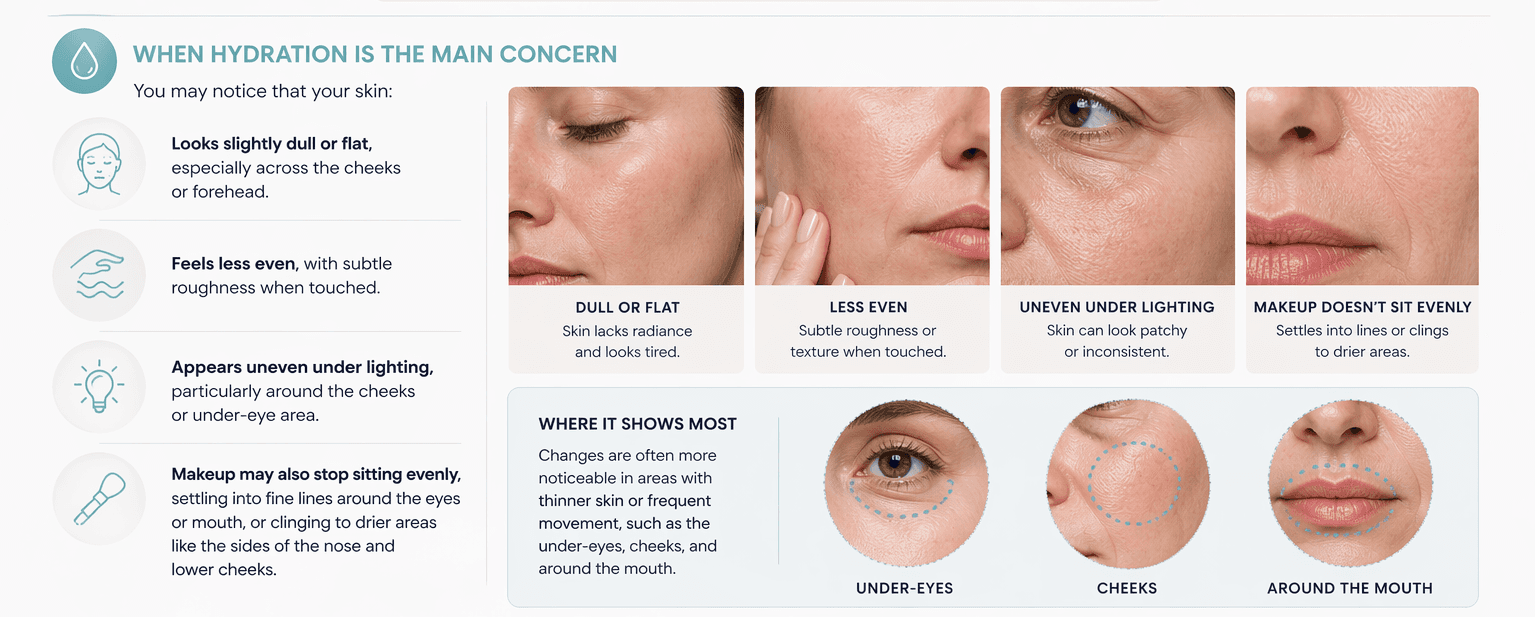
You may notice that your skin:
Looks slightly dull or flat, especially across the cheeks or forehead
Feels less even, with subtle roughness when touched
Appears uneven under lighting, particularly around the cheeks or under-eye area
Makeup may also stop sitting evenly, settling into fine lines around the eyes or mouth, or clinging to drier areas like the sides of the nose and lower cheeks.
Changes are often more noticeable in areas with thinner skin or frequent movement, such as the under-eyes, cheeks, and around the mouth.
In these cases, the issue is usually how well your skin is holding onto moisture.
A hyaluronic acid-based skin booster is typically considered in this case. Supporting hydration within the skin rather than on the surface, it helps improve the evenness of moisture distribution, which in turn affects how the skin looks and behaves throughout the day.
When Your Skin Isn’t Recovering the Way It Used To
This tends to show up more in how your skin behaves over time.
Acne marks or pigmentation linger longer, especially along the cheeks or jawline
Redness around the nose or cheeks takes longer to settle
The under-eye or lower face looks more tired or less “settled” after a long day
Even small breakouts or irritation, particularly along the jawline, chin, or temples, may leave behind marks that take longer to fade than before.
These patterns often reflect changes in how your skin responds to inflammation and daily stress, rather than a single surface issue.
A PDRN skin booster is often considered in these situations. It supports the skin’s recovery processes, which can influence how quickly it stabilises after daily wear and tear.
Over time, this can show up as skin that looks more even in tone, less reactive, and more consistent across commonly affected areas like the cheeks, jawline, and under-eye region.
When Firmness and Structure Become the Concern
At this stage, the changes you notice may not be about surface quality, but collagen support. You may notice that:
The skin along the lower cheeks or jawline appears less firm
The under-eye area looks thinner or slightly hollowed
Fine lines around the mouth or nasolabial folds remain visible even at rest
In areas such as the neck or lower face, the skin may also appear less able to maintain its shape, particularly when viewed from the side or during movement.
Collagen-stimulating options, such as PLLA-based skin boosters, are typically considered for these concerns. They work gradually over time, supporting the skin’s structural framework rather than producing an immediate visible effect.
Not sure which skin booster in Singapore is right for you? Book a consultation at Cambridge Medical (Somerset) to get a recommendation tailored to your skin.
What a Skin Booster Treatment Feels Like
A skin booster treatment in Singapore is typically performed in a clinical setting and takes approximately 20 to 30 minutes, depending on the areas being treated. The skin is cleansed beforehand, and a numbing cream may be applied to ensure comfort throughout the procedure.
The treatment involves a series of small injections placed across the skin. A sensation of light pressure or brief prickling is common, particularly in thinner areas such as the under-eyes or around the mouth. Because the product is distributed across multiple points, this sensation is brief and repeated rather than concentrated in one area.
After the session, small raised bumps at the injection points are expected and typically settle within a few hours to a day as the product spreads within the skin. Mild redness or slight swelling may occur, particularly in more delicate areas, but these effects are temporary and generally resolve within a few days.
What Changes, What Doesn’t, and When
Skin boosters do not produce a single, dramatic shift visible the next day. What changes instead is how the skin behaves in the weeks that follow, and this differs depending on the formulation used.
Formulation | What You May Notice | Timeline |
HA Skin Booster | Skin appears more settled; areas prone to looking flat, such as the cheeks or under-eyes, reflect light more evenly. Changes relate to how moisture is held within the skin. | Early improvements in appearance continue to take effect over the following weeks. |
PDRN Skin Booster | Areas that previously stayed red or marked begin to stabilise more quickly. Skin appears less reactive overall, with fewer day-to-day fluctuations. | Gradual stabilisation over several weeks; most notable across areas prone to inflammation. |
PLLA Skin Booster | Changes concern how the skin is supported rather than surface appearance. The lower face, around the mouth, and jawline may feel more resilient and hold their shape more consistently. | Longer timeline; results develop over several weeks to months as collagen production increases. |
What is consistent across all formulations is that the effect is distributed. Because the product is applied at multiple points, results tend to appear more evenly throughout the treated area rather than concentrated in one spot.
It is also worth understanding what skin boosters are not designed to do. They do not reposition deeper structures or replace volume in the way fillers do. They are suited to concerns about overall skin quality rather than structural change. For many patients, the shift is subtle but consistently noticeable: the skin looks more even, holds up better throughout the day, and requires less day-to-day effort to manage.
Why Skin Boosters Are Rarely a One-Time Treatment
The skin is not in a fixed state. It responds continuously to internal changes, environmental exposure, and daily stress, which is why skin boosters are typically approached as a course of treatment rather than a single session.
Initial sessions are spaced to allow the skin to respond in stages. Hydration improvements can appear relatively early, but processes such as repair signalling and collagen stimulation take longer to build and stabilise. A series of sessions allows these responses to develop more consistently over time.
Different areas of the face may also respond at different rates. Thinner or more mobile areas, such as the under-eyes or around the mouth, often show changes earlier and may require more targeted planning than areas like the cheeks.
After the initial course, maintenance becomes part of the ongoing approach. This is not because results disappear suddenly, but because the same factors that contributed to the original changes, age, environment, and daily wear, continue to act on the skin over time. Maintenance sessions are typically spaced a few months apart, depending on the formulation and how an individual’s skin responds.
In this way, skin boosters in Singapore are less about correcting a single concern and more about supporting the skin’s function over time.
Start with a Personalised Skin Assessment at Cambridge Medical (Somerset)
If your skin no longer responds the way it used to, it may be time to look beyond surface-level solutions.
At Cambridge Medical (Somerset), we assess how your skin behaves across different areas and conditions. This allows us to recommend a skin booster treatment approach that aligns with your skin’s needs.
To book a personalised consultation, reach out to us via WhatsApp today.
