
How to Treat Pigmentation: Understanding the Different Types Before Choosing a Method
Learn how to treat pigmentation by understanding different types, common causes, and why proper assessment matters before choosing a treatment method.
Key Takeaways:
How to treat pigmentation? Treatment effectively begins with identifying the specific type of pigmentation, rather than rushing to a premature diagnosis.
Different pigmentation types respond differently to treatment, which is why professional assessment is important.
Lasers, topical care, and lifestyle measures each play distinct roles depending on the underlying cause.
Treating pigmentation without understanding triggers can lead to recurrence or uneven results.
A personalised plan helps reduce the risk of worsening pigmentation over time.
What Is Pigmentation?
Pigmentation is a skin concern among individuals in Singapore and across Asia. Some people searching for how to treat pigmentation may be surprised to learn that pigmentation is not a single condition, but a broad term covering several distinct skin changes.
Treating all pigmentation the same may be ineffective and, in some cases, counterproductive.
For example, laser treatment for pigmentation may sometimes be explored for targeted concerns, with parameters adjusted based on pigment depth and skin response.
Understanding what type of pigmentation you are dealing with is a crucial first step before deciding on any method, whether topical, procedural, or lifestyle-based. This article explains the various types of pigmentation, their causes, and how treatment decisions are typically made in a clinical setting.
What Pigmentation Really Means
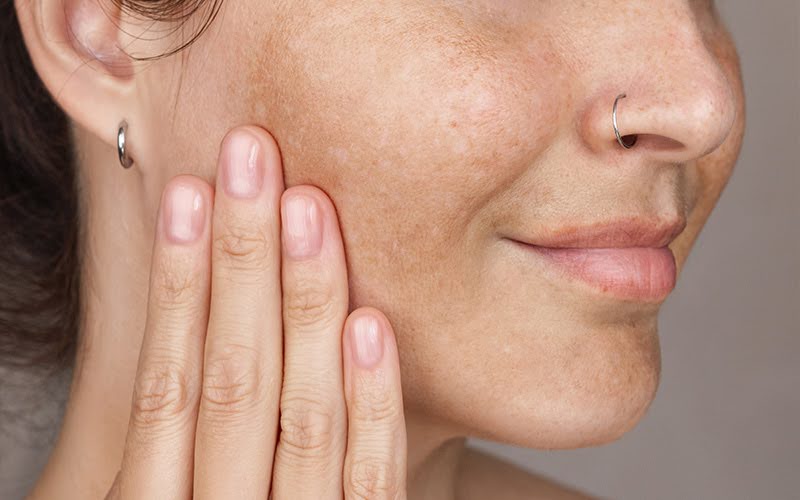
Pigmentation refers to areas of skin that appear darker than the surrounding skin due to increased melanin production. On the face, this often presents as facial pigmentation, patches of discolouration, or marks that may seem resistant to skincare alone. While pigmentation may be harmless, it may also be persistent and emotionally frustrating in some cases.
Importantly, pigmentation may sit at different depths within the skin and be triggered by different factors. This is why a method that works for one person may not work for another, even if the marks look similar.
Common Types of Pigmentation and How They Differ
One of the biggest challenges in learning how to treat pigmentation is recognising that different types of pigmentation behave differently, not only in appearance, but also in depth within the skin.
Epidermal pigmentation sits in the upper layers of the skin and may be responsive to treatment. Common examples include sun-induced pigmentation and freckles, which typically appear as well-defined brown spots linked to cumulative UV exposure. The pigment is closer to the surface and may require management and sun protection.
Dermal pigmentation is located deeper within the skin and may tend to be persistent. Post-inflammatory pigmentation, which develops after acne, insect bites, or skin injury, may extend into the dermis. When pigment settles at this depth, it may respond slowly and may require long-term management.
Mixed pigmentation involves both epidermal and dermal components. Hormonally influenced pigmentation, such as melasma, commonly falls into this category. It may form symmetrical patches on the face and may fluctuate with sun exposure, heat, or hormonal changes. Because pigment exists at multiple depths, mixed pigmentation may be prone to recurrence if triggers are not managed.
These differences explain why some people may experience isolated dark spots on skin that fade gradually, while others struggle with broader patches that recur despite repeated treatment.
Understanding whether pigmentation is epidermal, dermal, or mixed plays a key role in setting expectations.
Treatments and When They Are Considered
Treatment selection may be guided by pigmentation type, depth, skin tone, and lifestyle factors. Options are often combined.
Topical approaches may support skin turnover and help regulate pigment production. Sun protection remains essential for all pigmentation types, as UV exposure may negate treatment progress.
Energy-based treatments may be discussed when pigmentation persists.
In such cases, doctors may assess the underlying characteristics of the pigmentation, including whether vascular components or inflammation contribute to its appearance.
Options such as the pro yellow laser may be looked into as part of a targeted management approach.
In cases of stubborn pigment, clinicians may also explore whether a laser for hyperpigmentation is appropriate, often as part of a broader plan that includes skin barrier support and strict sun avoidance.
Why Treating Pigmentation Without Diagnosis Can Backfire
A common misconception is that stronger treatments lead to faster results. In reality, aggressive approaches without proper assessment may irritate the skin, trigger inflammation, and worsen uneven skin tone. This is true for deeper or hormonally driven pigmentation, which may be sensitive to heat and inflammation.
For example, using high-strength exfoliants or undergoing repeated procedures without adequate spacing may overstimulate melanocytes, leading to rebound pigmentation. In Asian skin types, there is also a higher tendency to develop post-inflammatory hyperpigmentation, where even mild irritation or injury prompts excess melanin production during healing. This means that treatments intended to lighten pigmentation can sometimes deepen or spread it if inflammation is not controlled.
This is why clinicians often advise on an assessment and pacing over quick fixes when discussing how to treat pigmentation safely.
Common Concerns And Misconceptions
Many individuals feel discouraged when pigmentation returns after treatment. Recurrence does not always indicate treatment failure. Pigmentation may reflect ongoing triggers such as sun exposure, heat, or hormonal influence rather than incorrect treatment choice.
Technologies such as the pro yellow laser are sometimes misunderstood as universal solutions, when in reality their suitability depends on the type of pigmentation and how the skin responds to light-based energy. No single laser should be seen as being able to treat all types of pigmentation safely or effectively.
Another misunderstanding is expecting uniform timelines. Some pigmentation fades within weeks, while other types improve slowly over months. This variability is normal and is part of why learning how to treat pigmentation requires patience and realistic expectations.
Who Benefits From Professional Guidance
Professional assessment is particularly important for individuals with recurring pigmentation, mixed pigmentation types, or sensitive skin. Those who have tried multiple treatments without lasting improvement may benefit from reassessing the underlying cause rather than repeating the same method.
Conversely, not all pigmentation requires procedural treatment. Some cases may respond well to conservative management, especially when triggers are identified early.
A Thoughtful Path Towards Managing Pigmentation
Understanding how to treat pigmentation starts with recognising that pigmentation is not one-size-fits-all. Different types of pigmentation require different approaches, and mistimed or unsuitable treatments may prolong the problem rather than resolve it.
Speak to us for a consultation on the type of pigmentation you are dealing with or to discuss suitable approaches.
